

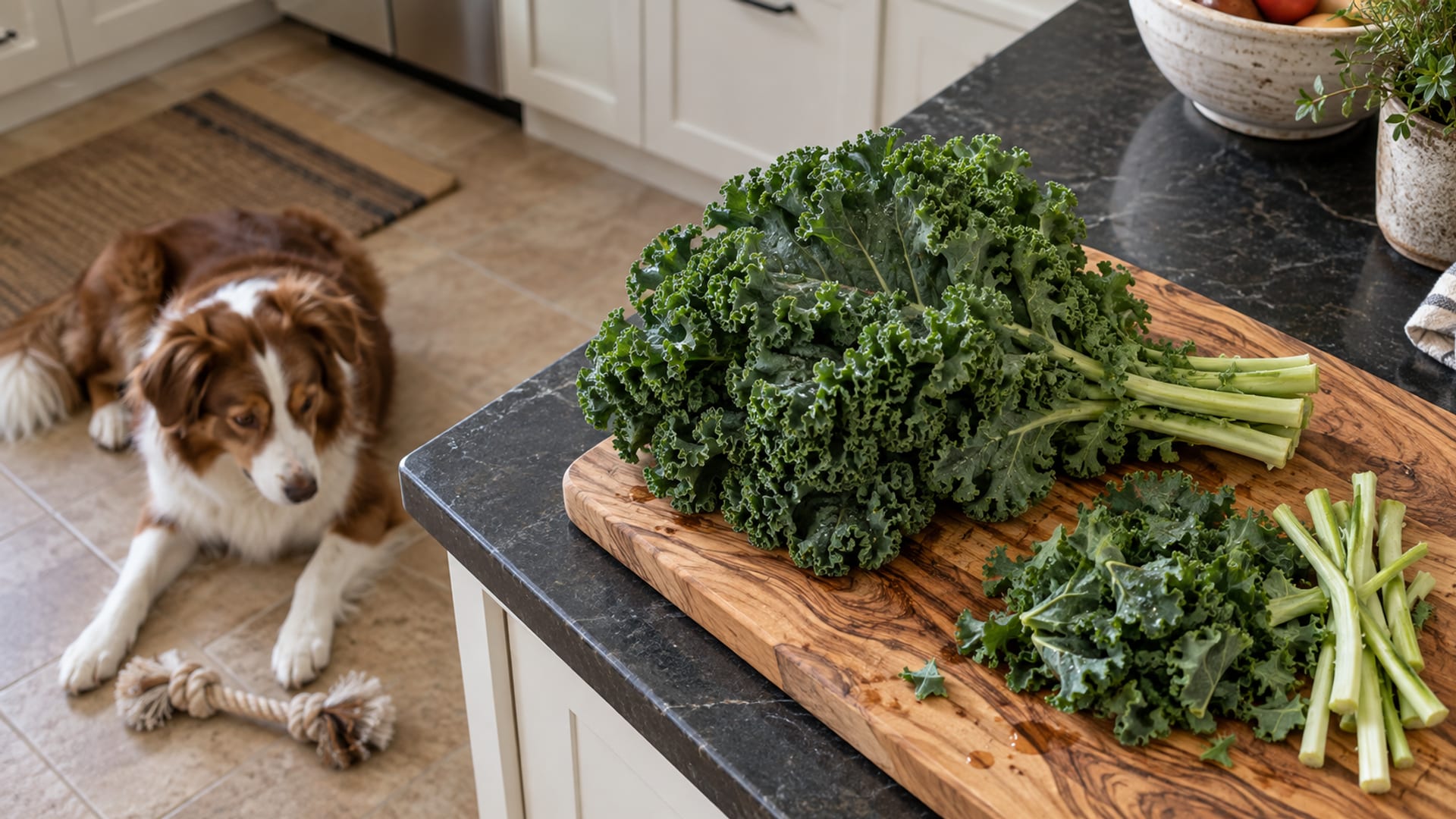
A little, now and then. Plain kale is not on the ASPCA's list of plants toxic to dogs, and the American Kennel Club says small, occasional amounts are unlikely to harm most dogs. The AKC also flags calcium oxalate and isothiocyanates in kale, and the second can irritate a dog's stomach, so kale is a sometimes food and a poor fit for dogs with bladder stones or thyroid disease.
If your dog stole a leaf or two of plain kale, watch for an upset stomach and that is usually the end of it. If they ate a lot, a bag of kale chips, a smoothie, or a dish cooked with onion or garlic, check the table below.
Key takeaways
Tap a card to bring it forward.
- Plain kale is not toxic to dogs. A small, occasional piece is unlikely to cause harm.
- Too much can bring vomiting, diarrhea or gas.
- Dogs with calcium oxalate stones, kidney disease or hypothyroidism should skip it unless their vet approves.
- Chop it small, serve it plain, and skip the stems if your dog gulps.
- Kale chips, smoothies and salads are judged by everything else in them.
After your dog ate kale
Tap or hover a row to highlight it.
| What they ate | What to do |
|---|---|
| What they ateA leaf or two of plain kale | What to doWatch for vomiting, gas or loose stool over the next day. |
| What they ateA whole bunch, or a lot for their size | What to doCall your vet for advice. |
| What they ateKale chips, salad, soup or a side dish | What to doRead the ingredients. Onion, garlic or lots of salt means call today. |
| What they ateA smoothie | What to doCheck for grapes, raisins, xylitol or avocado, and call if any are in it. |
| What they ateKale powder, green powder or a supplement | What to doCall your vet with the label. |
| What they ateAny kale, and your dog has had bladder stones or eats a urinary diet | What to doCall your vet and ask whether it matters. |
Pet Poison Helpline's first steps for any plant exposure are to move your pet away from it and to skip home antidotes. Then get the package or recipe, so you can say exactly what was in the dish.
Call right away if your dog is choking, keeps vomiting, seems weak or in pain, strains to pee, has blood in the urine, or passes little or no urine.
Raw, cooked, stems and chips: what to feed and what to skip
Tap or hover a row to highlight it.
| Form | For dogs | Why |
|---|---|---|
| FormRaw leaves, chopped | For dogsA small amount now and then | WhyNot toxic, but can upset the stomach |
| FormCooked plain leaves | For dogsA small amount now and then | WhySofter to chew; cooking may lower oxalate |
| FormStems and thick ribs | For dogsChop fine or skip | WhyTough pieces can choke a gulper |
| FormHomemade plain dried kale | For dogsA bite at most | WhyDrying concentrates what is in the leaf |
| FormStore-bought kale chips | For dogsSkip | WhyOften salted, oiled or seasoned with onion or garlic |
| FormKale powder, capsules, green powders | For dogsOnly with your vet's OK | WhyStrength and extra ingredients vary |
| FormOrnamental or flowering kale | For dogsIdentify it first | WhyUsually the same species, but names on garden labels are unreliable |
A review in Cogent Food & Agriculture measured about 297 mg of oxalate in 100 g of fresh kale and 2,302 mg in 100 g of dried kale. Those are food measurements. What they show is that drying packs nearly eight times the oxalate into the same weight, so a handful of dried kale is a lot more leaf than it looks.
How much kale to give, and how to serve it
The AKC gives no serving size by weight. Its guidance is small and occasional, and it points out that a Labrador may handle more than a Yorkshire Terrier. For most dogs that means a chopped piece or two, mixed into dinner or offered as a crunchy bite, and not every day.
- Wash it and chop it small.
- Serve it plain: no salt, oil, butter, onion, garlic or seasoning.
- Start with one small piece and see how your dog's stomach handles it.
- If your dog has hypothyroidism, ask first. The AKC says regular kale feeding may interfere with thyroid function.
Kale and bladder stones
Kale contains oxalate, and calcium oxalate is what many bladder stones in dogs are made of. That does not mean a bite of kale causes stones. The Merck Veterinary Manual describes calcium oxalate stones as the result of several factors together: metabolism, genetics and diet.
Merck lists Miniature Schnauzers, Chihuahuas, Bichon Frises, Yorkshire Terriers, Shih Tzus and Lhasa Apsos among the breeds more often affected. If your dog is one of them, or has had stones before, or eats a prescription urinary or kidney diet, your vet's diet plan decides whether kale belongs in the bowl.
Signs to watch for after kale
The usual reaction is a stomach one: vomiting, diarrhea, gas or a dog who turns down the next meal. The ASPCA notes that eating any plant material can cause vomiting and an upset stomach in pets. The Merck Veterinary Manual says small tastes of oxalate-containing plants generally cause stomach upset at most, and the serious effects come from large amounts.
Urinary problems build over time and would not show up the evening after one leaf. Straining, frequent tries, blood in the urine or very little urine at any point is a reason to see your vet.
"My dog eats kale out of the garden and has never had a problem"
That is real, and many dogs nibble kale with no trouble. It still is not a rule for every dog:
- Amount. Merck ties the serious effects of oxalate plants to large amounts.
- Size matters. The same leaf is a much bigger share for a Yorkie than for a Lab.
- Form matters. Fresh leaves, dried chips, powders and seasoned dishes are all different.
- Some dogs are more sensitive. Dogs with urinary, kidney or thyroid disease carry more risk.
- Stones are slow. They take time to form, so a dog can seem fine for a long while.
Kale chips, smoothies, green powders and kale look-alikes
- Kale chips from the store often carry salt, oil, cheese or onion and garlic seasoning. Can dogs eat onions? explains why garlic and onion powder are a concern.
- Smoothies can hold grapes, raisins, avocado or a xylitol sweetener. Can dogs eat grapes? covers what to do after grapes or raisins.
- Green powders and "super greens" mix concentrated kale with other plants and sweeteners. Treat them as a supplement and ask your vet.
- Collard greens belong to the same plant species but are a different vegetable.
- "Roman kale" is a name the ASPCA lists for beet, a different plant altogether.
- Kale in dog food: judge the whole labeled diet, since the kale is one ingredient among many.
Check what you learned
Quick check
Questions about dogs and kale
Which is better for dogs, kale or spinach?
For a healthy dog, neither is something the diet needs, and a small plain piece of either is a treat. Kale adds the stomach-irritating compounds the AKC mentions. If your dog has had bladder stones or eats a prescription urinary diet, ask your vet before giving any leafy green.
What greens can dogs not eat?
Green onions, chives and leeks are the big ones, because they belong to the onion family. Skip salads and cooked greens made with onion or garlic, and do not let your dog graze on garden or wild plants you cannot identify.
Can dogs eat raw kale?
Yes, a small chopped piece now and then. Raw kale is not toxic, but it can upset the stomach, so keep the amount small.
Can puppies eat kale?
No kale-specific rule exists for puppies. A puppy is small, so keep the piece tiny, chop it fine, and stop if it causes a loose stool.
Can kale cause kidney or bladder stones in dogs?
An occasional piece is not known to cause stones on its own. Merck describes calcium oxalate stones as the product of genetics, metabolism and diet together. Dogs already prone to them should follow their vet's diet.
Sources
Checked September 24, 2026.
- American Kennel Club, Can Dogs Eat Kale?
- ASPCA, Toxic and Non-Toxic Plant List: Dogs
- ASPCA, Toxic and Non-Toxic Plants
- Pet Poison Helpline, 24/7 Animal Poison Control Center
- Merck Veterinary Manual, Urolithiasis in Dogs
- Merck Veterinary Manual, Houseplants and Ornamentals Toxic to Animals
- Uddin and others, Cogent Food & Agriculture, Kale: Review on nutritional composition, bio-active compounds, health benefits and anti-nutritional factors