
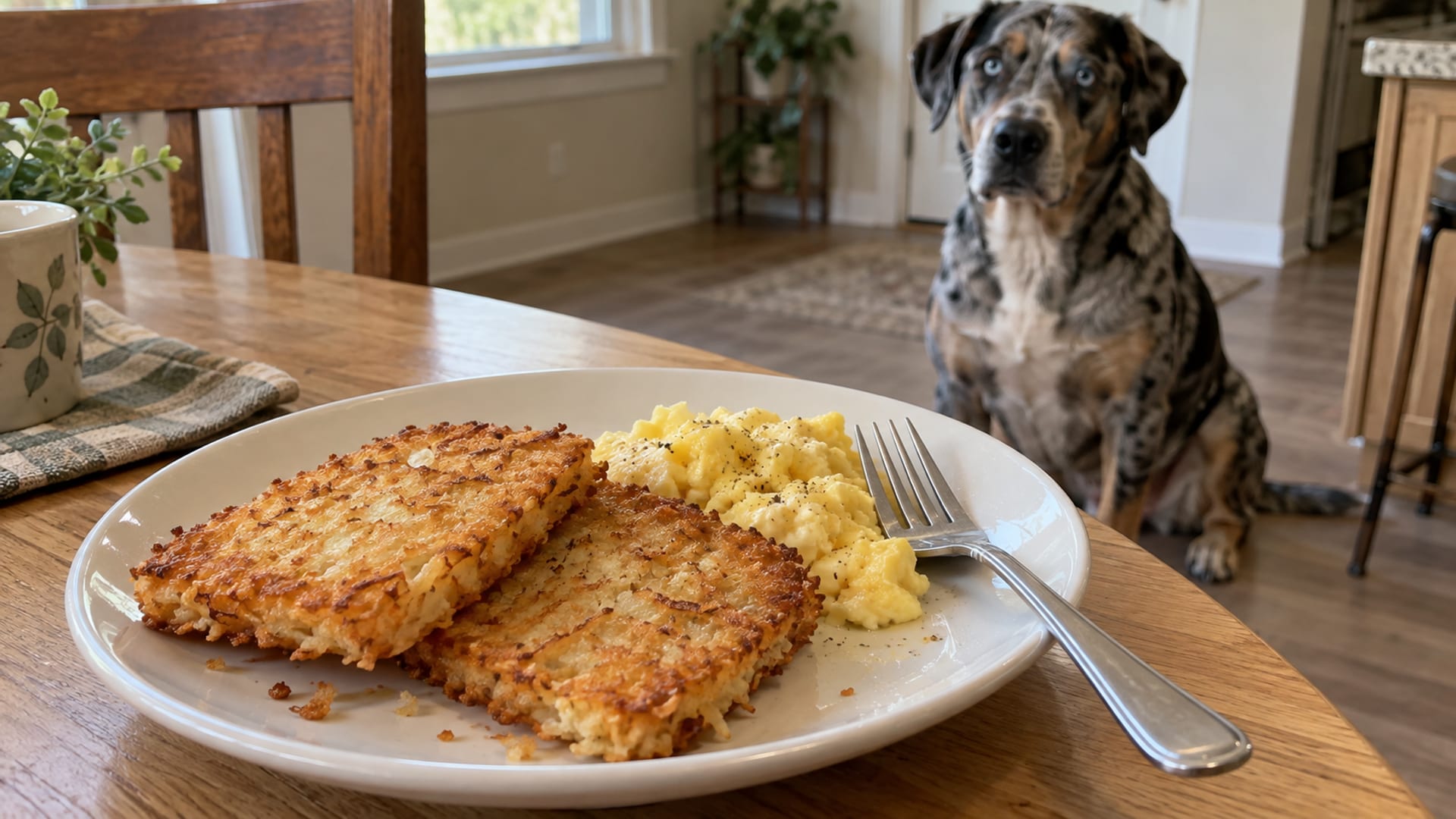
Caution. A small bite of plain, fully cooked hash brown is usually low concern for a healthy dog, but most hash browns are fried, salty and seasoned, and the ones made with onion, garlic, or raw or green potato need more care. If your dog already ate some, find the bag or box, work out roughly how much is gone, and use the steps below to decide whether to watch at home or call.
What was in it matters more than the potato. Plain cooked potato is fine for dogs in moderation, according to the American Kennel Club, and the ASPCA agrees while warning that raw potato can upset the stomach. The risk comes from the fat, salt and seasoning a hash brown picks up in the pan.
Key takeaways
Tap a card to bring it forward.
- A small bite of plain, fully cooked hash brown is usually low concern for a healthy dog.
- Read the label for onion, garlic, onion powder or garlic powder, which can damage red blood cells.
- Raw hash brown mix and green or sprouted potato are a different exposure and worth a call.
- Fried, fatty hash browns are a bigger worry for a dog that has had pancreatitis.
- Onion and garlic trouble often shows up three to five days later, so keep watching.
What to do if your dog already ate hash browns
A vet or the ASPCA Animal Poison Control Center will ask for the same few facts, so gather them first.
- Move whatever is left out of reach. A dog that got one patty will often go back for the rest of the bag, and the total amount shapes every answer that follows.
- Find the ingredient list. Look for onion, garlic, chives, leeks, onion powder, garlic powder and seasoning blends; the powders are more concentrated than the fresh vegetables and easy to miss, according to the Merck Veterinary Manual.
- Estimate how much and when. Count the patties or guess the share of the bag and note the time, because you will be asked for both along with your dog's weight.
- Note whether it was cooked, raw or green. Raw mix and green or sprouted potato carry natural compounds that plain cooked potato mostly lacks.
- Call your vet or a pet poison line if any of these fit. The hash browns had onion or garlic and your dog ate a real amount, is small, or you can't tell how much is gone; the potato was raw, green or sprouted; your dog ate a large amount or a whole package; or your dog has had pancreatitis.
- Hold off on home treatments and medicine unless a vet says otherwise. What helps one dog can hurt another.
One bite of a plain patty with a clean label and a dog acting normal usually means watching at home. When the label or the amount is a mystery, call.
Which hash browns are lower risk and which are not
The oil or butter, the salt, and the seasoning decide most of the risk, so the same word on a menu can mean very different things for your dog.
Tap or hover a row to highlight it.
| Form | How to treat it |
|---|---|
| FormPlain, fully cooked shredded potato, no seasoning | How to treat itLow concern in a small amount |
| FormFrozen bagged hash browns | How to treat itRead the label; some add onion, garlic, salt or seasoning |
| FormFast-food or restaurant hash browns | How to treat itDon't share; watch after a theft |
| FormHomemade hash browns with onion or garlic | How to treat itCall if the amount is real or unknown |
| FormHash brown casserole | How to treat itCall if the amount is real or unknown |
| FormRaw hash brown mix | How to treat itAvoid; call if eaten |
| FormGreen or sprouted potato, eyes, green peel | How to treat itAvoid; call if eaten |
| FormPlain cooked sweet potato hash browns | How to treat itLower concern |
The green parts of a white potato, along with sprouts, eyes, leaves and stems, can hold natural compounds called glycoalkaloids, mainly solanine and chaconine. A review from the European Food Safety Authority describes them as irritating to the gut and able to interfere with an enzyme the nervous system depends on. The Merck Veterinary Manual lists potato leaves, shoots and unripe berries among plants poisonous to animals.
Onion and garlic are a separate problem. Merck says they damage red blood cells whether raw, cooked, dried or granulated, so frying doesn't remove the risk.
Sharing potato at breakfast, and how much hash brown is a concern
If you like to share from your plate, potato is one of the easier things to give, as long as it isn't the hash brown. The American Kennel Club describes cooked potato as fine only in moderation and plain, without butter, milk, salt or seasoning. In practice, set aside a small piece of fully cooked, non-green potato before anything else goes in the pan. Our page on potatoes covers how to cook it for a dog.
Keep fried hash browns off the treat list, even plain ones. The Merck Veterinary Manual connects dietary indiscretion, a dog eating something rich or unusual, with vomiting and belly pain that can be part of pancreatitis, and dogs that have had it are managed on low-fat diets. Dogs with diabetes or kidney disease shouldn't get salty or fatty people food without their own vet's advice.
Nobody has published a safe amount of hash brown for dogs. The one number that exists comes from Merck: 15 to 30 grams of raw onion per kilogram of body weight has produced signs in dogs, and garlic is about three to five times more toxic than onion. That figure is for raw onion, and a package doesn't say how much onion is inside, so it can't be turned into a count of patties. The same patty is also a much bigger dose for a 10 pound dog than a 70 pound one. When onion or garlic was involved, call with the label, the amount eaten and your dog's weight, and let the vet do the math.
Signs to watch for, and when they show up
After a small amount of plain cooked hash brown, many dogs show nothing. Others get a short bout of vomiting, diarrhea, belly discomfort or a skipped meal from the fat and salt. Repeated vomiting, a painful belly, or a dog that hunches and won't eat is worth a same-day call, especially with a pancreatitis history.
Onion and garlic work on a slower clock. The Merck Veterinary Manual says red blood cell changes begin within about 24 hours and peak around 72 hours, and the breakdown of red cells commonly happens three to five days after eating. Watch through at least day five for:
- Tiredness, weakness, or tiring early on a normal walk
- Pale or yellow gums
- Fast breathing or a racing heart
- Dark, reddish or brown urine
- Collapse
Raw or green potato brings different signs. The European Food Safety Authority review lists stomach upset, weakness, low energy, drooling, wide pupils, heart rate changes, tremors and collapse, with breathing or heart failure in severe poisoning. It gives no dog timeline, so call as soon as you see any of these, or trouble breathing.
My dog ate hash browns before and was fine
Plenty of dogs have cleaned up a dropped hash brown and been fine, and if yours did, that happened. It just isn't a rule for the next time or the next dog. Toxic effects depend on the dose and the animal, according to the Merck Veterinary Manual, and a quiet incident usually means several things lined up:
- The piece was small compared with the dog's size.
- The potato was fully cooked and not green.
- That batch had no onion, garlic or onion powder.
- That dog handled it well on that day.
- Onion and garlic signs take days, so a dog can look fine on day one and not on day four.
A different brand, a batch with onion, or a smaller dog can change the result.
Hash brown look-alikes and products to check
Potato pancakes, latkes, rösti, tater tots, home fries and diner breakfast potatoes each have their own mix of fat, salt, onion, garlic and flour, so give them the same label check. For homemade versions, ask whoever cooked whether onion or garlic went into the batter. Fried potatoes in general follow the same logic as french fries.
Sweet potato hash browns come from a different plant, Ipomoea batatas, while white potato is Solanum tuberosum, so the green potato concern doesn't carry over, though fat and seasoning still do. See our page on sweet potatoes for the plain version.
On a label, onion and garlic can sit inside words like "seasoning" or "natural flavor," so read the full ingredient list. A well known brand name, including a fast-food chain's, doesn't tell you what's in it. If your dog cleared the rest of the plate too, our pages on bacon, eggs, onions and garlic can help.
Check what you learned
Three quick questions on what decides your next step.
Quick check
Questions about dogs and hash browns
These tend to come up once the first worry has passed.
Can dogs eat McDonald's hash browns?
Treat any fast-food hash brown as a fried, salty food and keep it for yourself. If your dog grabbed one, go through the steps above and call if your dog is small or has had pancreatitis.
Is a frozen hash brown patty a choking risk?
It can be. A large, hard, frozen piece gulped without chewing can get stuck, whatever the ingredients. Call your vet right away for gagging, retching without bringing anything up, or trouble swallowing.
Can a puppy or an older dog have a bite of hash brown?
Puppies and older dogs may cope less well with vomiting and dehydration, and a small puppy gets a bigger dose from the same bite. Plain cooked potato set aside before frying is the better way to share. If a puppy got into seasoned hash browns, call.
Does my cat need to stay away from onion hash browns too?
Yes, and cats are more sensitive to onion and garlic than dogs, according to the Merck Veterinary Manual. Concentrated forms like onion powder, dried flakes and soup mixes are the biggest concern. Keep hash browns with onion or garlic away from every pet in the house.
Sources
Checked September 25, 2026.
- American Kennel Club, Can Dogs Eat Potatoes?
- ASPCA, Pets and Produce: Top Tips on Vegetable Garden Safety
- ASPCA, Animal Poison Control
- Merck Veterinary Manual, Garlic and Onion (Allium spp) Toxicosis in Animals
- Merck Veterinary Manual, Pancreatitis in Dogs and Cats
- Merck Veterinary Manual, Plants Poisonous to Animals
- Merck Veterinary Manual, Introduction to Poisoning
- European Food Safety Authority, Risk assessment of glycoalkaloids in feed and food, in particular in potatoes and potato-derived products