
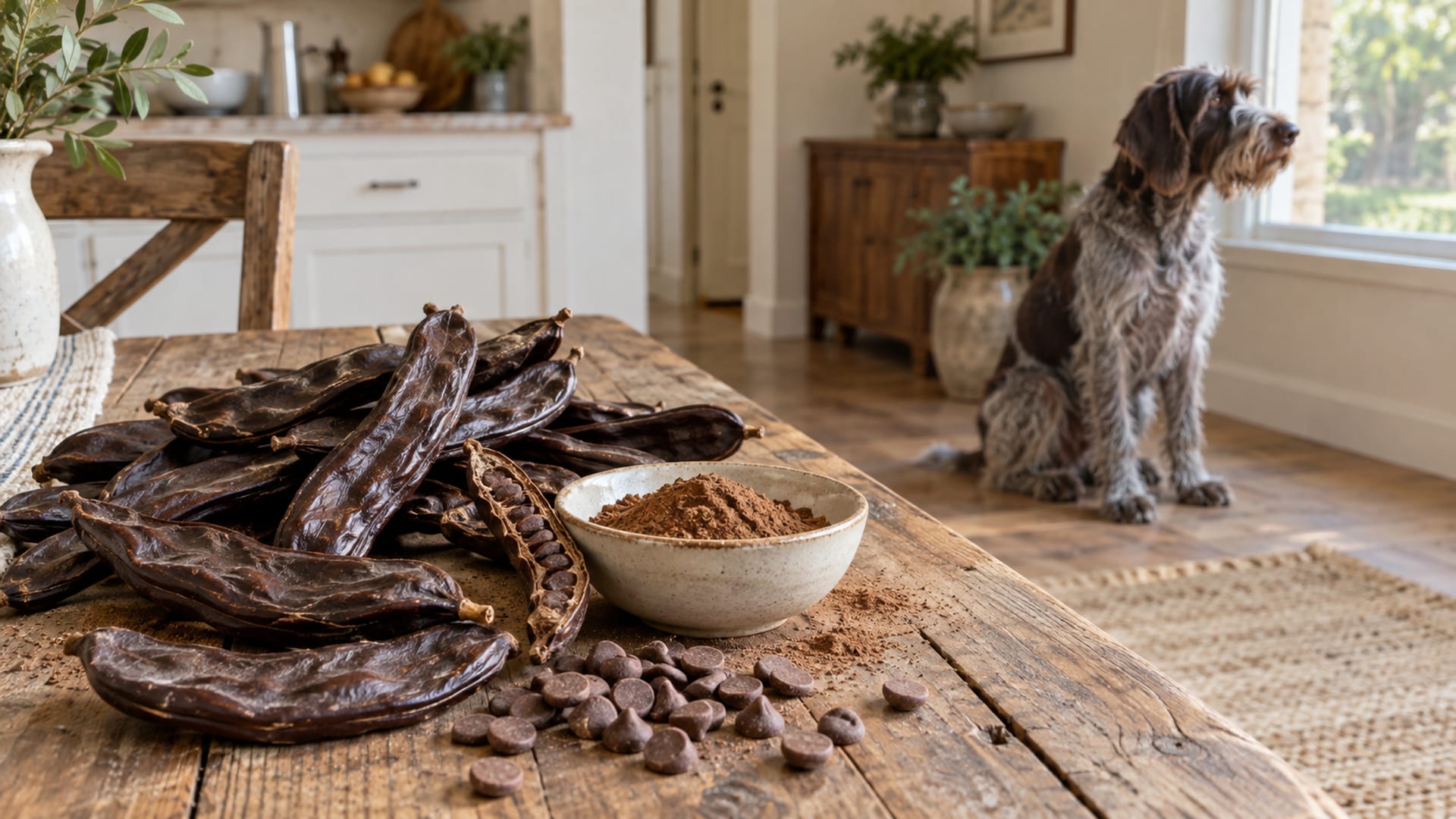
Yes. Plain carob from the carob tree, *Ceratonia siliqua*, is listed as non-toxic to dogs by the ASPCA, and a little of it can be shared. If your dog already ate some, check two things: what else was in the product, and whether your dog swallowed a hard whole pod or its seeds.
Carob looks and tastes enough like chocolate that the worry makes sense. A food study by Papaefstathiou and colleagues measured caffeine and theobromine, the two stimulants behind chocolate poisoning, and found both below the level their test could detect in carob pulp, carob powders and carob coffee. That is why a plain carob chip does not act on a dog's body the way a chocolate chip does.
Key takeaways
Tap a card to bring it forward.
- The ASPCA lists plain carob (Ceratonia siliqua) as non-toxic to dogs, cats and horses.
- Tested carob pulp and powder showed no detectable caffeine or theobromine, so plain carob does not poison a dog the way chocolate can.
- A hard whole pod or its seeds can make a dog choke or get stuck in the gut, and the same piece is a bigger problem for a small dog.
- Carob treats, candy and "vegan chocolate" can contain xylitol, cocoa, raisins, macadamia nuts, alcohol or a lot of fat, and those ingredients decide how urgent things are.
- Nobody has published a carob serving size for dogs, so keep what you share small, plain and occasional.
What to do if your dog already ate carob
Go through these in order. A dog that ate a little plain carob usually needs nothing beyond the first few steps and a watchful evening.
- Pick up whatever is left and keep the package. The ingredient list is the quickest way for you, or your vet, to tell a harmless carob chip from a treat that needs a phone call.
- Read the whole label for xylitol, cocoa or chocolate, raisins, macadamia nuts and alcohol. The FDA warns that xylitol can drop a dog's blood sugar and may injure the liver, and when a product contains any of these, that ingredient sets the urgency instead of the carob.
- Estimate how much was eaten and note your dog's size. The ASPCA's guidance on people foods is to write down the amount eaten and contact your vet or poison control.
- Check the yard or the counter for missing pods and seeds. Carob is non-toxic as a plant, but a hard dried pod can lodge in the throat, stomach or intestines, which needs a vet.
- Call your vet now if a risky ingredient was on the label, a whole pod or many hard pieces went down, or you don't know what was eaten. Call early as well for a very small dog, a young puppy, a dog with health problems, or any large amount.
If it was a little plain carob and your dog is acting like itself, keep the package handy and watch for the signs below.
Which carob forms are fine and which need a closer look
Carob shows up as flour, dog-bakery chips, candy coatings, syrup and the long brown pods that drop from the tree. What changes from one form to the next is how hard the piece is, how much sugar it carries, and what the maker mixed in.
Tap or hover a row to highlight it.
| Form | Plain carob | What to check |
|---|---|---|
| FormCarob powder or flour | Plain carobNon-toxic | What to checkSugar and fiber if a lot was eaten |
| FormCarob chips and dog-bakery treats | Plain carobNon-toxic when plain | What to checkThe full ingredient list, especially xylitol, cocoa and raisins |
| FormCarob candy, coatings and "carob chocolate" | Plain carobDepends on the product | What to checkCocoa, chocolate, xylitol, macadamia nuts, alcohol and high fat |
| FormCarob syrup, molasses and drinks | Plain carobNon-toxic when plain | What to checkAdded sugar and any other ingredients |
| FormRipe or dried whole pods | Plain carobNon-toxic plant | What to checkChoking or gut blockage from a hard whole pod |
| FormSeeds | Plain carobNot listed as toxic | What to checkChoking or blockage from intact seeds |
| FormLeaves and stems of the tree | Plain carobCovered by the plant listing | What to checkLarge amounts have not been studied in dogs |
| FormLocust bean gum | Plain carobMade from the seed | What to checkThe rest of the product it is in |
The University of Málaga Botanical Garden describes the pod as the edible part, a sweet pulp wrapped around hard seeds. A dried pod is harder and more concentrated in sugar and fiber, which makes a whole one the form to keep away from dogs.
The plant listing covers leaves and stems too, but it says nothing about a dog that ate a large pile of them, so call your vet if your dog stripped a branch.
How much carob to give and how to serve it
There is no set carob portion for dogs by weight or breed, so treat it as a taste. A small pinch of plain carob powder stirred into food, or a soft pod broken into small bits, is plenty for an occasional treat. Carob is mostly sugar and fiber, and the Merck Veterinary Manual notes that adult dogs do not need dietary carbohydrates as an essential nutrient, so carob adds flavor rather than anything your dog's regular food is missing.
A few habits keep sharing simple:
- Buy powder or chips with carob as the only ingredient. Two bags that look the same on the shelf can have very different lists on the back.
- Keep whole dried pods out of reach. If you have a carob tree, rake up fallen pods before your dog finds them.
- Break anything hard into small pieces first. Large intact pieces are where the choking and blockage risk comes from.
- Keep carob a small part of the day's food. A balanced meal still does the real work.
Signs to watch for after your dog eats carob
Plain carob is not expected to cause poisoning signs. What a large amount can do is upset the stomach for a while, because carob is rich in sugars and fiber, as the carob composition study shows. Soft stool, diarrhea, vomiting, gas or a tender belly after a big helping usually point to that.
A hard whole pod or seeds are a different matter. Choking shows up right away as gagging or trouble breathing. A blockage further down can take longer to show, and how long depends on the piece and where it stopped. Watch for these signs and call your vet if you see them:
- Gagging or retching that doesn't stop
- Vomiting more than once
- A painful or tight belly
- Low energy or weakness
- Refusing food
- Straining with little or no stool coming out
If the product had xylitol, chocolate, alcohol, raisins or another hazardous ingredient, the signs and their timing come from that ingredient. Weakness, tremors, collapse, seizures or unusual breathing after any carob product mean you call right away, in line with the ASPCA's list of people foods to avoid.
My dog ate carob before and was fine
That happened, and for most dogs eating plain carob it is exactly what you would expect. The plant is non-toxic according to the ASPCA, so a dog that licked up some powder or ate a couple of plain chips and carried on normally had an ordinary day.
It still doesn't mean the next carob snack will go the same way, for a handful of reasons:
- The amount was different. A little carob is less likely to upset the stomach than a big helping.
- The dog's size was different. A pod a large dog swallows without trouble can choke or block a small one.
- The form was different. Powder and soft pulp pass easily; a hard dried pod or a handful of seeds can get stuck.
- The product was different. One treat may be plain carob, while the next contains xylitol, cocoa, raisins, alcohol or a lot of fat.
- Every dog's stomach is different. Some dogs handle new foods with no fuss and others get loose stool from very little.
- Some signs come later. A dog that swallowed a hard piece can look normal at first before a blockage shows itself.
So, what your dog did last time is worth remembering, and the label and the size of the piece still decide what you do this time.
Carob products, look-alike names and the algarrobo question
"Carob chocolate," "vegan chocolate" and "dog chocolate" are product names. They don't tell you whether cocoa went into the bar, so read the ingredients, and if cocoa or chocolate is there, read our entry on chocolate. Carob cookies and candy are worth a second look for raisins and macadamia nuts, and holiday sweets deserve the closest look, since the FDA's holiday hazards page points to chocolate, xylitol and mixed sweets as common pet dangers that season.
The FAO lists carob, locust bean and algarroba as names for the tree, and you may also see sugar pod, locust pod or St. John's bread. Locust bean gum is a processed thickener made from the inner part of the carob seed, so it carries none of the choking risk of a whole pod; judge the rest of the food it is in.
Algarrobo is the name to be careful with. In Spain and around the Mediterranean it means carob. In Latin America it can also mean trees in the *Prosopis* group, such as *Prosopis pallida*, *Prosopis alba* or *Prosopis chilensis*, a different plant from the one the ASPCA lists. If your dog ate pods or a product labeled algarrobo and you aren't sure which tree it came from, look for the scientific name on the package or bring a pod along when you call your vet.
Check what you learned
Three quick questions to make sure the key points stuck.
Quick check
Questions about dogs and carob
These come up often once the first worry has passed.
Can cats eat carob too?
The ASPCA also lists *Ceratonia siliqua* as non-toxic to cats and horses. The same product caution applies, so a carob treat with chocolate, xylitol or alcohol in it is a separate risk for a cat as well.
Is carob okay for a dog with diabetes or pancreatitis?
Ask your vet first. Carob pulp is naturally sweet and many carob products add more sugar, which matters for a diabetic dog. For a dog prone to pancreatitis, the concern is the fat in carob candies, coatings and baked goods, which comes from the recipe rather than from the carob.
Is caroba the same plant as carob?
It is a different plant with a similar name. The ASPCA's plant list for dogs gives caroba its own entry as *Jacaranda procera*, separate from carob. If a label or a plant tag says caroba, look that plant up on its own.
Can my dog have carob syrup or carob coffee?
Plain carob syrup is mostly sugar, so a lick at most. Carob coffee is roasted carob, and the tested samples in the composition study had no detectable caffeine, though drinks vary with whatever else is mixed in. Anything made with real coffee is covered in our entry on coffee.
Sources
Checked September 25, 2026.
- ASPCA Animal Poison Control Center, Toxic and Non-toxic Plants: Carob
- Papaefstathiou et al., Food Science & Nutrition, Nutritional characterization of carobs and traditional carob products
- ASPCA Animal Poison Control Center, People Foods to Avoid Feeding Your Pets
- U.S. Food and Drug Administration, Paws Off Xylitol; It's Dangerous for Dogs
- Merck Veterinary Manual, Nutritional Requirements of Small Animals
- University of Málaga Botanical Garden, Ceratonia siliqua
- Food and Agriculture Organization of the United Nations, Ceratonia siliqua L.
- U.S. Food and Drug Administration, Keep Your Dogs and Cats Safe From Holiday Hazards
- ASPCA Animal Poison Control Center, Toxic and Non-Toxic Plant List, Dogs