

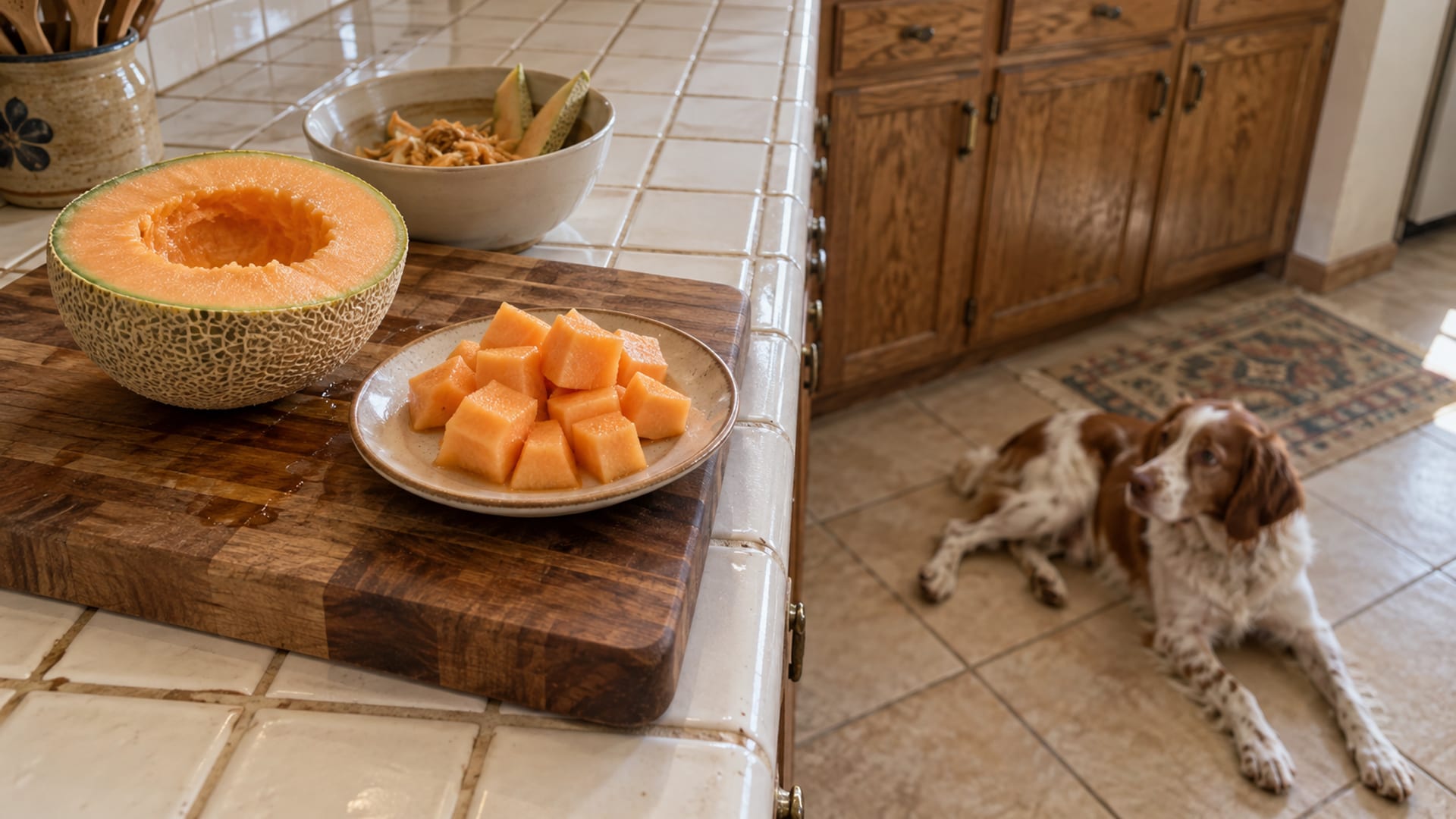
Yes. The ASPCA lists true cantaloupe as non-toxic to dogs, and the AKC says dogs can have it in moderation. Give plain, ripe flesh in small cubes, with the rind and seeds removed.
If your dog stole a few bites of peeled melon, keep an eye on them and skip other treats today. If they chewed up and swallowed the rind, the next section tells you what to watch for.
Key takeaways
Tap a card to bring it forward.
- Ripe cantaloupe flesh is non-toxic to dogs and makes a good summer treat in small amounts.
- The rind is the real concern: it can upset the stomach, cause choking, or get stuck in the gut.
- Scoop out the seeds before serving, mainly because they can be a choking hazard.
- Cantaloupe is sweet, so go easy with dogs that are overweight or have diabetes.
- Dried melon, juice and melon desserts are different foods. Check the label before sharing.
My dog ate cantaloupe: what now?
It comes down to which part your dog got.
Tap or hover a row to highlight it.
| What they ate | Next step |
|---|---|
| What they ateA few cubes of peeled flesh | Next stepNothing more. Watch for a loose stool if it was a big helping. |
| What they ateA lot of flesh at once | Next stepExpect possible gas, vomiting or diarrhea. Call your vet if it keeps going or your dog seems unwell. |
| What they ateRind, or a large chunk swallowed whole | Next stepWatch closely for the signs below over the next day or two, and call your vet if any show up. |
| What they ateSeeds | Next stepUsually harmless. Call right away only if your dog is gagging or struggling to breathe. |
| What they ateA melon dessert, drink or treat | Next stepRead the label for xylitol, chocolate, raisins, alcohol, onion or garlic. Call a vet if any are listed. |
AKC warns that cantaloupe rind can cause stomach upset and can become impacted in a dog's digestive tract. A blockage can show up as:
- vomiting again and again, or trying to vomit with nothing coming up
- a sore or tight belly
- no interest in food, or not keeping water down
- straining without passing stool
- unusual tiredness
The Merck Veterinary Manual notes that signs of a blockage depend on where it sits and whether it is partial or complete, so they may build slowly. Any of them is a reason to call your vet. Choking or trouble breathing means go now.
Which parts of a cantaloupe are safe
Tap or hover a row to highlight it.
| Part or form | Okay for dogs? | Why |
|---|---|---|
| Part or formRipe flesh, fresh | Okay for dogs?Yes, in small pieces | WhyNon-toxic, according to the ASPCA |
| Part or formFrozen cubes of flesh | Okay for dogs?Yes | WhyAKC suggests frozen melon as a summer treat |
| Part or formSeeds | Okay for dogs?Better removed | WhyAKC calls them harmless but a choking hazard |
| Part or formRind | Okay for dogs?No | WhyStomach upset, choking and blockage risk (AKC) |
| Part or formDried cantaloupe | Okay for dogs?Only a little, if plain | WhyDrying takes out the water and packs in the sugar |
| Part or formJuice or puree | Okay for dogs?Skip the store kind | WhyLess filling, more sugar per sip, and added ingredients |
| Part or formStems and leaves | Okay for dogs?No | WhyNot food; do not offer plant parts |
Cantaloupe is mostly water. USDA data puts raw cantaloupe at about 90 grams of water and 0.9 grams of fiber per 100 grams, according to the USDA FoodData Central. It adds a little moisture to a hot day, and your dog still needs a full water bowl.
How much cantaloupe to give, and how
Keep it to a few small cubes for a small dog and a few more for a large one. The ASPCA suggests snacks make up no more than 5% of a pet's daily calories, and fruit counts toward that.
- Wash the outside before you cut, so nothing from the rind ends up on the flesh.
- Cut away all the rind and scoop out the seeds.
- Dice the flesh into pieces smaller than your dog tends to gulp. Go smaller for puppies and toy breeds.
- Start with one or two pieces the first time and see how your dog's stomach handles it.
- Stay nearby while they eat.
For a hot afternoon, the AKC suggests freezing cantaloupe cubes or blending melon into a frozen treat. Cut frozen pieces small, because hard cubes are easier to choke on.
The AKC notes cantaloupe is high in sugar and may not suit dogs with diabetes or dogs that need to lose weight. If your dog has either, ask your vet before adding it.
"My dog eats the whole melon slice, rind and all"
Some dogs do chew through a rind and pass it without trouble, and that can be true of your dog. It does not tell you what will happen next time or with another dog. A big dog that chews slowly handles a strip of rind very differently from a small dog that swallows chunks whole. The amount matters, the size of the piece matters, and a partial blockage can take a day or more to cause obvious trouble. Cutting the flesh off the rind takes a minute and keeps the riskiest part out of the bowl.
Watermelon, honeydew and melon products
- Honeydew is the same plant species as cantaloupe. Plain flesh with the rind and seeds removed follows the same rules.
- Watermelon is a different plant, with its own rind and seed concerns.
- "Melon" in a recipe may mean any melon. Check which fruit it was if your dog got into a fruit salad, and look for grapes in the bowl, which are a different matter entirely. Can dogs eat grapes? covers that.
- Melon-flavored candy, gum, sorbet or drinks can contain xylitol, sugar or alcohol. The label decides the risk here.
- Store-bought dog treats with cantaloupe are fine when every ingredient on the list is something your dog can have.
Check what you learned
Quick check
Questions about dogs and cantaloupe
How much cantaloupe can you give a dog?
A few small cubes as an occasional treat. Keep all snacks together under about 5% of your dog's daily calories, the ASPCA guideline, and give less to small dogs.
Can dogs eat cantaloupe rind?
No. The AKC says the rind can cause stomach upset and choking and can become stuck in the digestive tract. Cut the flesh off before sharing.
Are cantaloupe seeds bad for dogs?
The seeds are not toxic. The AKC still advises removing them, because they can be a choking hazard.
Can puppies eat cantaloupe?
Yes, a small piece of ripe flesh with no rind or seeds. Dice it finer than you would for an adult dog and watch them eat.
Can dogs eat honeydew or watermelon?
Honeydew is the same species as cantaloupe, so plain flesh without rind or seeds works the same way. Watermelon is a separate fruit; remove its rind and seeds as well.
Sources
Checked September 24, 2026.
- ASPCA Animal Poison Control Center, True Cantaloupe
- ASPCA, Sharing is Caring: Foods You Can Safely Share with Your Pet
- American Kennel Club, Can Dogs Eat Cantaloupe?
- American Kennel Club, Frozen Summer Treats for Dogs
- Merck Veterinary Manual, Disorders of the Stomach and Intestines in Dogs
- USDA FoodData Central, Melons, cantaloupe, raw