

No. The kitchen bay leaf comes from bay laurel, *Laurus nobilis*, and the ASPCA lists that plant as toxic to dogs because of eugenol and other essential oils, which can cause vomiting and diarrhea, while a large swallow of whole leaves can block the gut. If your dog has already eaten one, call your vet or a pet poison line, and have three details ready: how many leaves, whether they went down whole, and whether they were fresh, dried, cooked, ground or an oil.
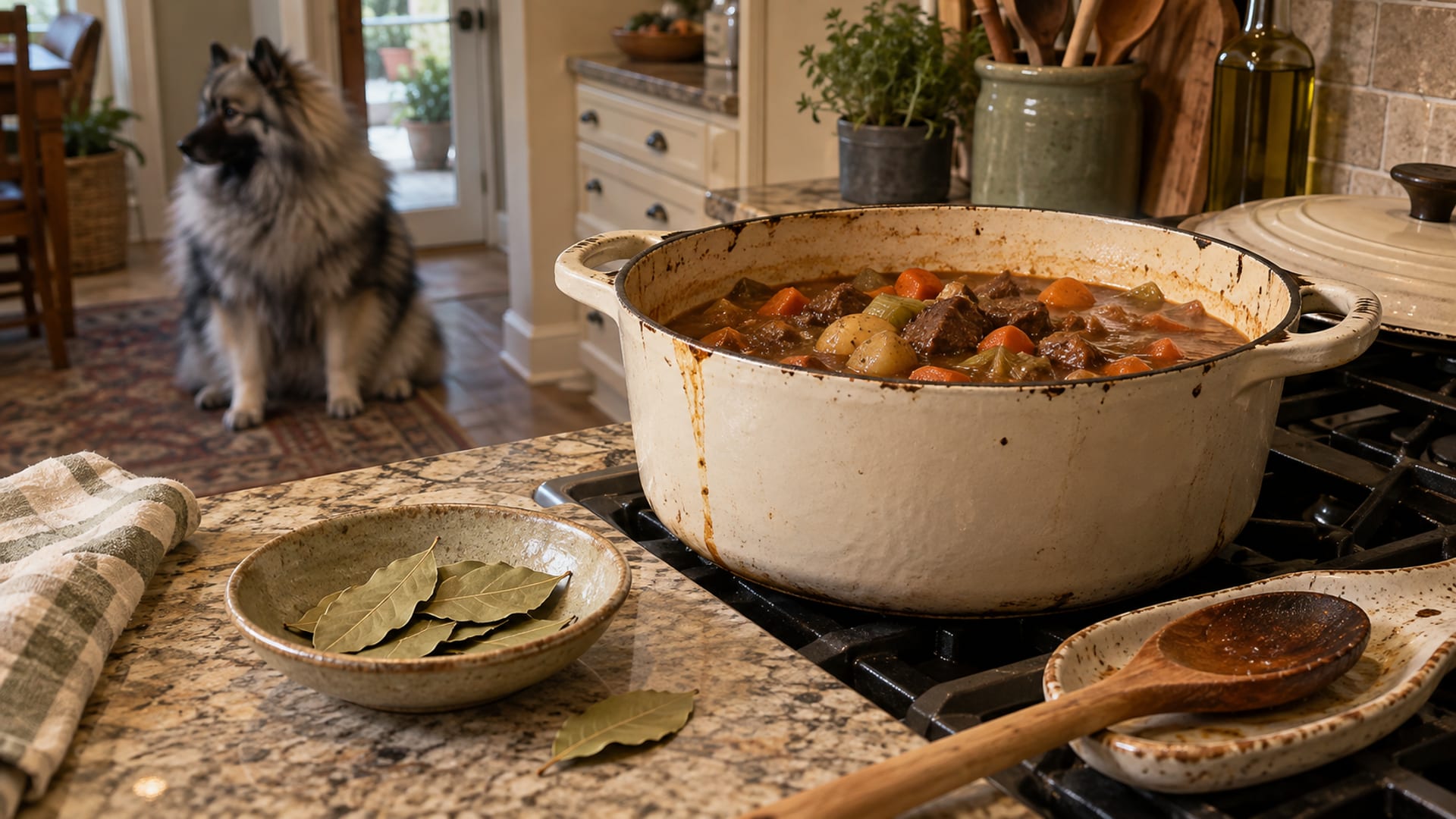
The leaf is usually one fished out of soup, beans or stew, a dried one from the spice jar, or one off a potted bay tree. All of those are the same plant. If you are asking about a dish that simmered with bay, the answer starts in the same place: take the leaf out before any of that food goes near a dog bowl.
Key takeaways
Tap a card to bring it forward.
- Bay laurel, the ordinary kitchen bay leaf, is listed by the ASPCA as toxic to dogs.
- Eugenol and other essential oils in the leaf can cause vomiting and diarrhea.
- A leaf swallowed whole can lodge in the stomach or intestines, which is a separate problem from the oils.
- There is no known safe number of leaves, so a suspected leaf is a reason to call your vet or a pet poison line.
- Mountain laurel, cherry laurel and California bay are different plants that share the name and need their own identification.
What to do if your dog just ate a bay leaf
Work through these in order. The first three take a minute and make the phone call faster.
- Pick up whatever is left. Move the plate, the pot, the spice jar or the fallen leaves out of reach. Every extra leaf your dog gets to changes what the vet has to work with.
- Confirm what it was. Check the jar label or the recipe, or take a photo if the leaf came off a shrub or tree. The Merck Veterinary Manual treats plants called laurel, such as *Kalmia* and *Prunus*, as separate plants, so a name alone is not enough to go on.
- Estimate how much, and when. Count what is missing if you can, and note whether the leaves went down whole or in pieces, and roughly what time it happened. The ASPCA ties blockage to large whole-leaf swallows, so one whole dried leaf and a few flecks in gravy lead to different conversations.
- Call your vet or a pet poison line. The ASPCA advises contacting poison control or your local veterinarian as soon as possible when a pet may have eaten something toxic. Give them the details from steps 2 and 3 plus your dog's weight, and they can tell you whether to come in or watch at home.
- Watch and write it down. Note any vomiting, diarrhea, retching or change in appetite, with the time. If something new starts after you have already called, call back, because new signs can change the advice you were given.
Fresh, dried, cooked, ground or oil: what each form means
The oils live in the leaf itself, so every form carries them. The National Herbarium record for *Laurus nobilis* lists essential oils in the leaf that include cineol and eugenol. What changes from form to form is the second risk, the size and shape of what went down.
Tap or hover a row to highlight it.
| Form | What to do | Why |
|---|---|---|
| FormFresh leaf from a bay tree | What to doKeep it away from your dog | WhyIt holds the plant's essential oils, including eugenol |
| FormDried leaf from the spice jar | What to doKeep it away from your dog | WhyDrying has not been shown to remove the oils, and a whole dried leaf can still block the gut |
| FormCooked leaf from soup or stew | What to doRemove it before sharing any food | WhyCooking has not been shown to make the leaf safe, and a whole softened leaf can still lodge |
| FormGround or powdered bay leaf | What to doKeep it away from your dog | WhyPowder may lower the blockage risk, but the oils are still there and no safe amount is published |
| FormSmall leaf fragments in food | What to doCall if you are unsure | WhyLikely less risky than a whole leaf, but no safe amount is published |
| FormBay leaf tea, extract, oil or supplement | What to doKeep it away from your dog | WhyThese can hold more oil per dose than a single culinary leaf |
| FormBay berries | What to doKeep them away from your dog | WhyNo dog-specific dose information exists, so safety cannot be assumed |
For a shared dish, the practical step is simple. Count the bay leaves that go into the pot and count them coming out, so a stray one does not end up on a plate your dog can reach. The ASPCA gives no safe serving of bay leaf for dogs, so the leaf itself never belongs in a dog's food. Soups and stews often carry onions and garlic too, so check the whole recipe before sharing.
How many bay leaves is too many?
There is no number to check your dog against. The ASPCA lists bay laurel as toxic and describes the signs, but it does not give a count of leaves or a dose by body weight that separates a mild upset from a serious one. That is why a single leaf is still worth a phone call.
These are the details that shape the advice you get:
- How many leaves. More leaves means more oil and more material that could lodge.
- Whole or in pieces. An intact leaf is the one linked to blockage. Fragments or a lick are a smaller exposure.
- The form. Oils, extracts and teas are more concentrated than a leaf from the jar.
- Your dog's size. A whole leaf is a bigger object for a small dog's stomach and intestines. That is common sense about size, not a published rule, and one more reason to give the vet your dog's weight.
Call right away if your dog swallowed more than one leaf or a whole leaf, got into a bay oil or extract, or ate a "laurel" you cannot identify. The same goes for any vomiting, diarrhea, belly discomfort, weakness, trouble swallowing, repeated retching, or trouble keeping food or water down.
Signs to watch for after a bay leaf
The ASPCA lists vomiting and diarrhea as the signs of bay laurel poisoning. Those come from the oils, and in many cases they are the whole story.
A whole leaf adds a second set of signs to keep an eye on. A leaf that lodges in the stomach or intestines can show up as retching again and again without much coming up, a sore or tense belly, weakness, trouble swallowing, or a dog who cannot keep food or water down. The most serious realistic outcome is a blockage that needs a vet to treat it. How bad that gets depends on how much went down, the leaf's size, where it lodged, and whether it passes or gets worse.
The ASPCA gives no set window for when signs start or how long they last, so call at the first sign on this list, whenever it shows up. If you have been reading about "laurel" and found timelines for mountain laurel, those come from a different plant, described in a case report in the Journal of Veterinary Emergency and Critical Care, and they do not apply to a kitchen bay leaf.
My dog ate a bay leaf before and was fine
That happens, and I believe you. Plenty of dogs have snagged a bay leaf off a plate and had an ordinary day afterward. One good outcome just does not tell you what the next leaf or the next dog will do.
Several things can explain a dog who showed no signs:
- The amount was small. The ASPCA's blockage concern centers on larger whole-leaf swallows.
- The leaf was in pieces, or only licked. That is a smaller exposure than an intact leaf going down.
- Dogs respond differently. The ASPCA gives no single dose that predicts how any one dog will react.
- It may not have been bay laurel. A leaf called "laurel" or "bay" can be another plant entirely.
- Signs were mild or missed. One soft stool in the yard is easy to overlook.
Your dog's experience was real. It is simply not a rule for the next time.
Other plants called laurel or bay, and products that contain it
The names "bay" and "laurel" cover several plants besides the one in your spice jar. If the leaf came from outside, a photo, a plant tag or the scientific name is the reliable way to know what your dog ate.
- Bay laurel, sweet bay, true laurel, bay tree: these usually mean *Laurus nobilis*, the kitchen bay leaf.
- Mountain laurel: *Kalmia latifolia*, a different plant with its own toxicology, listed separately by the Merck Veterinary Manual.
- Cherry laurel: *Prunus* species, also a different plant with different concerns.
- California bay or California laurel: often *Umbellularia californica*, a separate species.
- "Laurel" in Mexican and Latin American cooking: usually *Laurus nobilis* in the kitchen, though the same word is used for other plants, including *Litsea* species.
Check what you learned
Three quick questions on what matters most after a bay leaf.
Quick check
Questions about dogs and bay leaves
These come up often after a dog finds a bay leaf.
Are bay leaves toxic to cats too?
Yes. The ASPCA lists bay laurel as toxic to cats as well, for the same reason: eugenol and other essential oils. The signs are the same, vomiting and diarrhea, with a whole leaf able to cause a blockage after a large swallow.
Are bay berries safe for dogs?
Safety cannot be assumed. The European Medicines Agency has a report on the dried ripe fruit of *Laurus nobilis*, but it supplies no acute toxicity information that would tell you a safe amount for a dog. Keep the berries out of reach and call if your dog eats some.
My dog chews leaves in the yard. Could a bay tree be the problem?
It could, if one is within reach. The American Kennel Club notes that plenty of dogs eat leaves, so move a potted bay tree somewhere your dog cannot get to.
Is ground bay leaf in a spice blend safer than a whole leaf?
Powder may lower the blockage risk, since there is no intact leaf to lodge. The oils are still there, though, and no dog-safe amount has been published, so skip sharing food heavily seasoned with it.
Sources
Checked September 25, 2026.
- ASPCA Animal Poison Control Center, Toxic and Non-toxic Plants: Bay Laurel
- Merck Veterinary Manual, Plants Poisonous to Animals
- University of Buenos Aires National Herbarium, Laurel, Laurus nobilis
- Journal of Veterinary Emergency and Critical Care, Mountain laurel toxicosis in a dog
- European Medicines Agency, Lauri fructus summary report
- American Kennel Club, Why Does My Dog Eat Leaves?