
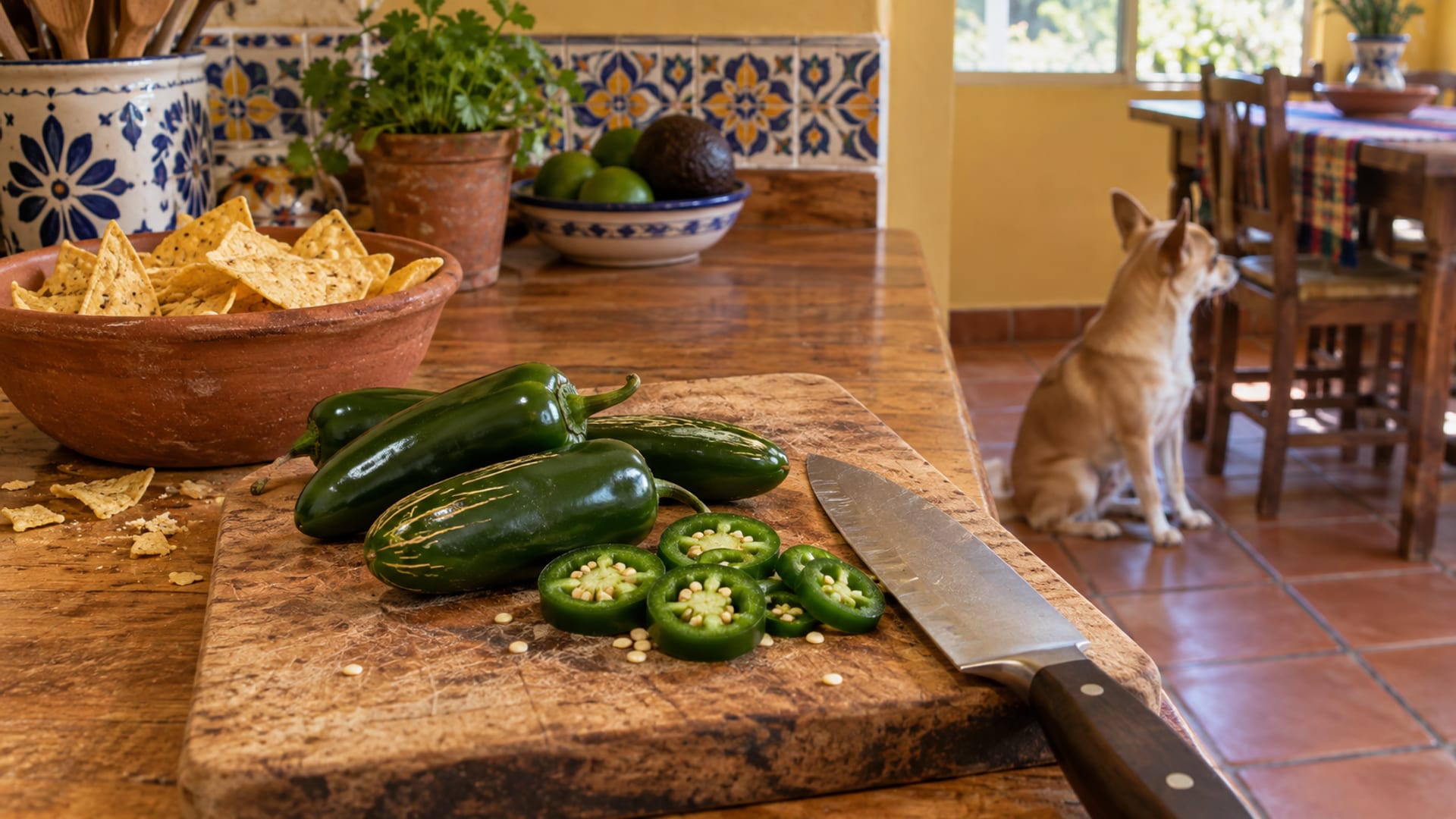
Keep jalapeños off your dog's plate. The heat in a jalapeño comes from capsaicin and related compounds, and the Merck Veterinary Manual says the pepper plant they come from can irritate the stomach and gut and cause vomiting and diarrhea. Merck also says it is not likely to be lethal, so a stolen slice usually means an unpleasant hour or two for your dog.
If your dog just ate a bite of plain jalapeño, give them fresh water and watch them for the rest of the day. Call your vet or a pet poison line if they ate several peppers, chili powder or dried chipotle, a dish made with onion or garlic, or if they start vomiting repeatedly.
Key takeaways
Tap a card to bring it forward.
- Capsaicin, the heat in jalapeños, irritates a dog's mouth, stomach and gut.
- A small bite of plain jalapeño is rarely serious; Merck calls it not likely to be lethal.
- Chili powder, chipotle and hot sauce are more concentrated than a fresh slice.
- Poppers, salsa and nachos often bring onion, garlic, fat and salt, which can be the bigger worry.
- Ornamental pepper plants are a different species and are toxic to dogs.
My dog ate a jalapeño: what to do now
- Take away what is left, including the plate, the jar or the bag of chips.
- Offer fresh water. Let your dog drink if they want to. Burning in the mouth usually makes a dog drool, lick their lips or paw at their face for a while.
- Work out what it really was. A raw slice, a pickled ring from a jar, a popper, a spoonful of salsa, chili powder? Keep the label or the recipe.
- Note how much and when, and your dog's weight.
- Call your vet or a poison line if it was more than a bite, a concentrated form, or a mixed dish. The ASPCA's advice after any risky people food is to note the amount and contact your vet or its poison control center.
Go to a vet now if your dog keeps vomiting, has severe diarrhea, seems weak or in pain, cannot swallow, or has trouble breathing.
Which forms of jalapeño matter most
Tap or hover a row to highlight it.
| Form | Concern | Why |
|---|---|---|
| FormFresh raw slice or bite | ConcernLow | WhyIrritating, but a small amount rarely goes beyond an upset stomach |
| FormWhole pepper | ConcernModerate | WhyMore capsaicin, and a big piece can be hard to pass for a small dog |
| FormRibs and seeds | ConcernModerate | WhyThe white ribs hold most of the heat, and seeds pick it up from them (Colorado State University) |
| FormCooked jalapeño | ConcernModerate | WhyCooking does not take the heat out; the dish around it may add fat or onion |
| FormPickled or canned jalapeños | ConcernModerate | WhyThe brine adds salt and seasoning |
| FormChipotle, dried flakes, chili powder | ConcernHigher | WhyDried and ground pepper is concentrated and easy to eat fast |
| FormHot sauce and salsa | ConcernHigher | WhyOften made with onion, garlic and salt |
| FormJalapeño poppers | ConcernHigher | WhyCheese, bacon and frying oil, plus toothpicks |
| FormLeaves and stems | ConcernAvoid | WhyMerck lists other compounds in the foliage of this plant |
There is no published amount of jalapeño, or of capsaicin eaten as food, that separates a safe bite from a harmful one in dogs. Size still matters: the same slice is a bigger dose for a small dog than a large one.
The rest of the dish is often the bigger problem
Jalapeños usually arrive inside something else, and those other ingredients carry their own risks:
- Onion and garlic in salsa, pico de gallo, chili and taco seasoning can damage red blood cells. Can dogs eat onions? and can dogs eat garlic? explain what to watch for over the following days.
- Cheese, bacon and frying oil in poppers and nachos are a lot of fat at once, which can upset the gut or, in some dogs, trigger pancreatitis.
- Salt in pickled jalapeños, chips and seasoning mixes adds up in a small dog.
- Toothpicks holding poppers together can injure the mouth or gut if swallowed.
- Xylitol or alcohol turn up in some sauces and drinks. Read the label.
When you call, say what was in the dish as well as the pepper. That list often decides what the vet recommends.
Signs to watch for, and when to call
Most dogs that eat a little jalapeño show the effects in the mouth and belly:
- drooling, lip licking, pawing at the mouth
- drinking a lot of water right away
- vomiting or diarrhea
- a sore belly, restlessness, or not wanting to eat
Mouth signs come quickly; stomach upset can follow over the next several hours. Call your vet if vomiting or diarrhea keeps going, if your dog seems dull or dehydrated, or if you know the dish had onion or garlic in it.
"My dog has eaten jalapeños before and was fine"
That happens, and it likely means the amount was small, the pepper was mild, or it was a sweet bell pepper that looked the part. None of that holds every time. Peppers vary a lot in heat, a spoonful of chili powder is not a fresh slice, and a small dog takes in more for its size than a big one. Some stomachs handle spice worse than others, and loose stool can show up hours later when nobody is watching. A good outcome once does not make jalapeños a snack.
Bell peppers, ornamental peppers and other look-alikes
- Bell peppers are the same plant species bred with little or no heat. They are a different answer: can dogs eat bell peppers?
- Ornamental pepper, also called Jerusalem cherry or winter cherry, is a different plant, *Solanum pseudocapsicum*. The ASPCA lists it as toxic to dogs and cats because of solanine, with signs that can include stomach upset, seizures and breathing trouble. If your dog chewed a decorative potted "pepper," call your vet now and bring a photo.
- Serrano, habanero, cayenne and other hot peppers carry more heat than most jalapeños. Treat them with more caution.
- Chipotle is a smoked, dried jalapeño, so it is concentrated.
- Black pepper is a different plant: can dogs eat black pepper?
- Pepper spray and bear spray hold concentrated capsaicin. If your dog was sprayed or bit a canister, call your vet.
Check what you learned
Quick check
Questions about dogs and jalapeños
Can one jalapeño hurt a dog?
For most dogs, one plain jalapeño causes mouth burning and maybe vomiting or diarrhea, and Merck says the plant is not likely to be lethal. A small dog, a very hot pepper or a dish with onion or garlic changes that. Call your vet if you are unsure.
My dog ate a jalapeño and is vomiting. What should I do?
Call your vet, especially if the vomiting keeps coming back, your dog seems weak or in pain, or the pepper came in a dish with other ingredients.
Are jalapeño seeds bad for dogs?
The seeds themselves make little heat, but they pick up capsaicin from the ribs around them. Keep the whole pepper away from your dog.
Can dogs eat jalapeño poppers?
Skip them. Along with the pepper, poppers bring cheese, bacon, frying oil, salt and sometimes toothpicks, and some recipes add onion or garlic.
Can dogs eat food that has a little jalapeño in it?
The jalapeño is rarely the main worry. Check the rest of the recipe for onion, garlic, a lot of fat or salt, and call your vet if any of those were in it.
Sources
Checked September 25, 2026.
- Merck Veterinary Manual, Plants Poisonous to Animals
- ASPCA, People Foods to Avoid Feeding Your Pets
- ASPCA Animal Poison Control Center, Ornamental Pepper
- Colorado State University, Food Source Information, Jalapeño Peppers