

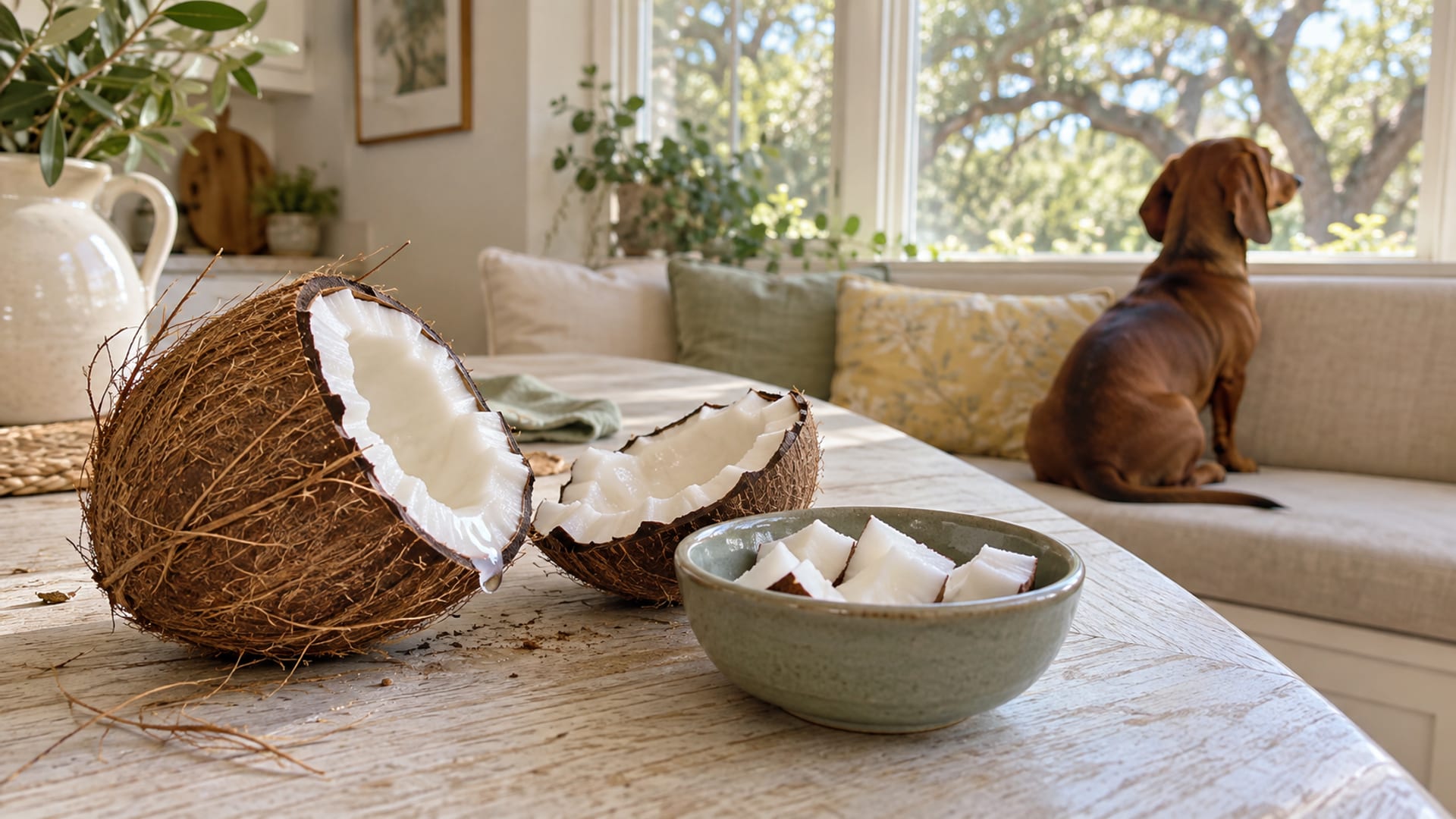
Yes. Small amounts of coconut and coconut products are unlikely to cause serious harm, according to the ASPCA, though the oils in the flesh and milk can cause an upset stomach, loose stools or diarrhea. Keep it plain, keep it small, and keep the hard shell and hairy husk away from your dog.
If your dog ate a few bites of coconut flesh, there is nothing to do but watch for a loose stool. If they chewed and swallowed shell or husk, drank a lot of coconut oil, or ate a sweet coconut treat, the sections below walk through what to do.
Key takeaways
Tap a card to bring it forward.
- Plain, unsweetened coconut flesh is a fine occasional treat for most healthy dogs.
- Coconut is fatty: too much can cause diarrhea, and dogs with pancreatitis should skip it.
- Shell and husk can choke a dog, irritate the gut or cause a blockage.
- Coconut water is a treat, and plain water stays your dog's drink.
- Sweetened or flavored coconut foods can hide xylitol, chocolate or raisins.
Coconut already eaten? Start here
Tap or hover a row to highlight it.
| What they ate | Next step |
|---|---|
| What they ateA few pieces of plain coconut flesh | Next stepNothing. Watch for a loose stool or gas over the day. |
| What they ateA lot of flesh, oil or coconut milk | Next stepWatch for vomiting and diarrhea. Call your vet if it keeps going, or if your dog has had pancreatitis. |
| What they ateShell, husk or coconut fiber | Next stepCall your vet now, even if your dog seems fine. |
| What they ateSweetened coconut, candy, baked goods or coconut ice cream | Next stepRead the label for xylitol, chocolate, raisins or alcohol, and call if any are listed. |
The ASPCA's advice when a pet gets into a people food is to note how much was eaten and contact your veterinarian or poison control. For shell or husk, call even if nothing seems wrong yet, because blockage signs can take a while to show.
Call right away if you see choking, trouble breathing, repeated vomiting, a painful belly, collapse or seizures.
Coconut form by form
Tap or hover a row to highlight it.
| Form | Okay for dogs? | What to know |
|---|---|---|
| FormFresh flesh, plain | Okay for dogs?Yes, a little | What to knowCut small; the fat can loosen stools |
| FormUnsweetened dried or shredded | Okay for dogs?Yes, sparingly | What to knowMore concentrated than fresh |
| FormSweetened shredded coconut | Okay for dogs?Better not | What to knowAdded sugar and sometimes other ingredients |
| FormCoconut oil | Okay for dogs?A little | What to knowMostly fat; large amounts cause diarrhea |
| FormCoconut milk, unsweetened | Okay for dogs?A little | What to knowThe oils can upset the stomach |
| FormCoconut cream | Okay for dogs?Better not | What to knowFattier than coconut milk |
| FormCoconut water, plain | Okay for dogs?Now and then | What to knowContains potassium; does not replace water |
| FormShell and husk | Okay for dogs?No | What to knowChoking, gut irritation and blockage risk |
The AKC warns that swallowed shell or husk can irritate the gut and cause an intestinal blockage. The white flesh is the part to share.
Coconut is not cocoa, a mix-up the AKC flags in its list of human foods. Cocoa and cacao come from the chocolate plant and contain theobromine and caffeine, which are toxic to dogs. The same mix-up happens with garden mulch: coconut fiber mulch and cocoa bean hull mulch are different products, and the cocoa one can poison a dog. Can dogs eat chocolate? covers that one.
How much coconut, and how to give it
Keep all treats, coconut included, to about 10% of your dog's daily calories, the AKC says, and offer coconut in small pieces. For a puppy, the AKC suggests a very small amount now and then, introduced slowly.
Coconut oil gets its own rule. In an AKC article, veterinarian Dr. Jolee Stegemoller says "up to a teaspoon or so for a large dog is okay," and warns that large amounts can cause diarrhea. That figure is for a large dog, so a small dog needs far less.
Skip coconut, or ask your vet first, if your dog:
- has a history of pancreatitis or eats a low-fat diet
- is overweight
- has kidney disease or an electrolyte problem, because coconut is high in potassium
The Merck Veterinary Manual names eating things outside the usual diet as a risk factor for pancreatitis in dogs, which is why a fatty treat matters more for those dogs.
Coconut oil is often sold for dogs' coats and health. The AKC's coconut oil article says it contains lauric acid and medium-chain fats, and that there is no clear evidence dogs get enough of them from coconut oil to protect against infection. Treat it as a fatty extra, and ask your vet before using it for a skin or health problem.
Signs to watch for
After too much flesh, oil or milk, the usual signs are loose or greasy stool, diarrhea, vomiting, belly discomfort, or a dog that is off its food and tired.
A swallowed piece of shell or husk looks different, and the signs can be slow to start. Keep watching for:
- vomiting again and again, or not keeping food down
- a sore belly
- not wanting to eat
- tiredness
- straining or not passing stool
If you see one of these, call your vet. A large, fatty helping can also lead to pancreatitis, which needs a vet.
"My dog eats coconut all the time and is fine"
Plenty of dogs do well with a little coconut, and that is real for your dog. It does not carry over to every dog. A big dog handles the same spoonful of oil better than a small one, a few bites of flesh are not the same as a chewed shell, and a dog with a history of pancreatitis or kidney disease is in a different spot from a healthy one. Some dogs' stomachs are simply more sensitive to fat. And if the last thing your dog swallowed was husk, the signs of a blockage can take time to appear.
Check what you learned
Quick check
Questions about dogs and coconut
Is coconut ok for dogs to eat?
Yes, plain coconut flesh in small amounts is fine for most healthy dogs. The ASPCA says small amounts are unlikely to cause serious harm. Leave out the shell and husk, and go easy because of the fat.
Can dogs eat coconut oil?
A little. It is mostly fat, and a vet quoted by the AKC puts it at up to about a teaspoon for a large dog. Too much causes diarrhea, and dogs prone to pancreatitis should avoid it.
Can dogs drink coconut water?
Plain coconut water is fine as an occasional treat. It should not replace your dog's water bowl, and its potassium is a concern for dogs with kidney disease.
Can dogs eat coconut shell or husk?
No. Both can cause choking, irritate the gut or block the intestines. If your dog swallowed some, call your vet.
Can puppies eat coconut?
A very small amount now and then, introduced slowly, according to the AKC. Puppy stomachs upset easily, so start with a tiny piece.
Is coconut the same as cocoa for dogs?
No. Coconut comes from the coconut palm. Cocoa comes from the plant used for chocolate and is toxic to dogs.
Sources
Checked September 24, 2026.
- ASPCA Animal Poison Control Center, People Foods to Avoid Feeding Your Pets
- American Kennel Club, Can Dogs Eat Coconut?
- American Kennel Club, Coconut Oil for Dogs: Is It Really Good for Them?
- American Kennel Club, Which Human Foods Can Dogs Eat and Which Are Dangerous?
- Merck Veterinary Manual, Pancreatitis in Dogs and Cats (updated September 2025)