

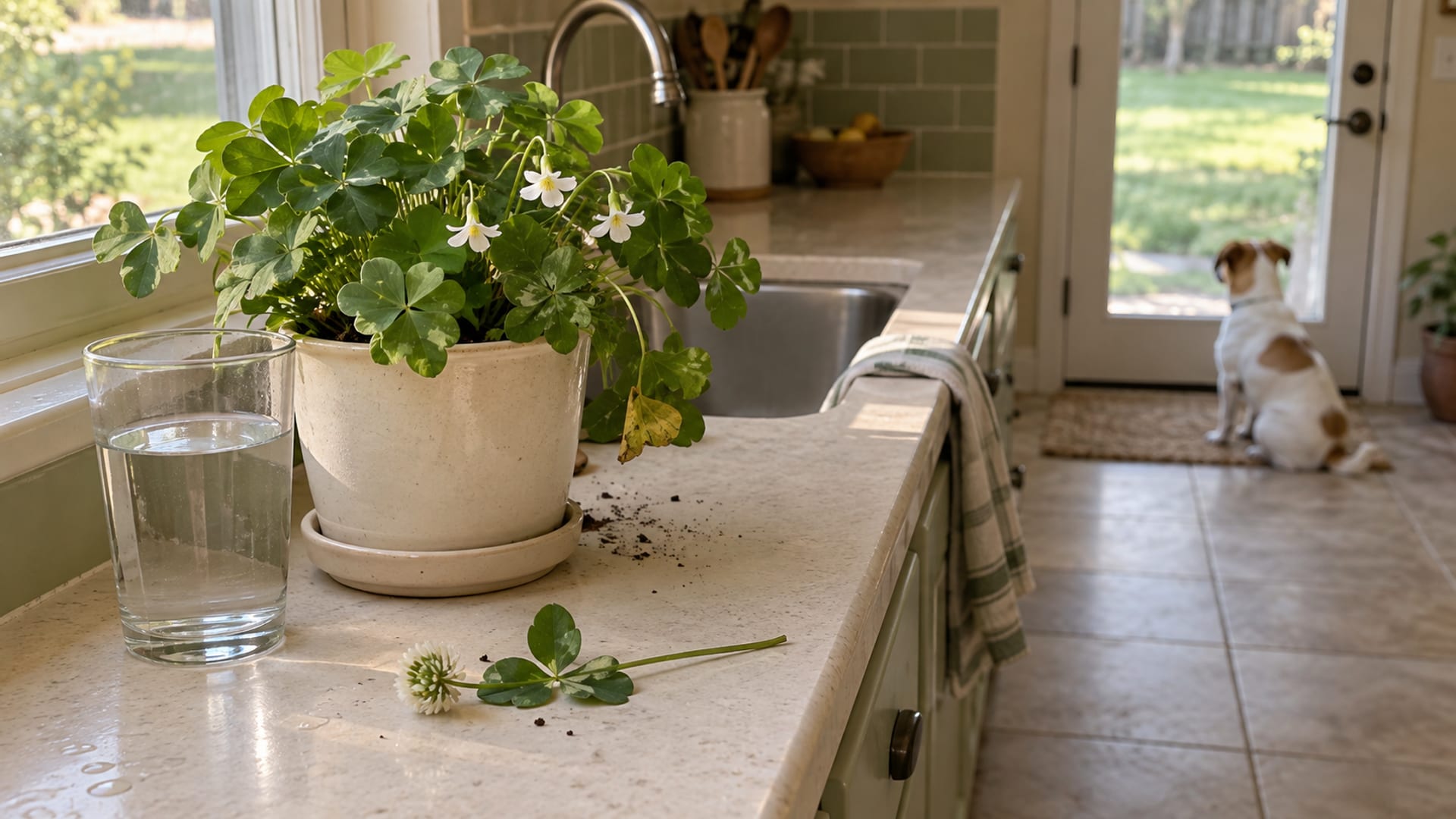
A few bites of fresh lawn clover, the white or red kind that grows in grass, are low concern for most dogs, and watching for an upset stomach is usually all it takes. Common *Trifolium* clover does not appear on the ASPCA's list of plants toxic to dogs. The word "clover" covers other plants, though, and two of them matter.
If your dog chewed a potted shamrock plant, grazed a patch of wood sorrel, ate moldy hay, or ate from a lawn that was just sprayed or fertilized, call your vet or a pet poison line. Take a photo of the plant or bring a piece to the phone.
Key takeaways
Tap a card to bring it forward.
- Fresh white or red lawn clover is low concern in small amounts.
- Shamrock houseplants and wood sorrel are usually *Oxalis*, which contains soluble oxalates and is toxic to dogs.
- Moldy sweet clover hay can cause a clotting problem and serious bleeding.
- A lawn treated with weed killer, pesticide or fertilizer can be a bigger risk than the clover itself.
- When you cannot tell which plant it was, a photo and a call are the safe move.
Your dog ate clover: what to do next
Tap or hover a row to highlight it.
| What your dog ate | Next step |
|---|---|
| What your dog ateA few bites of fresh white or red lawn clover | Next stepNothing urgent. Watch for vomiting or diarrhea. |
| What your dog ateA lot of lawn clover | Next stepWatch for an upset stomach, and call your vet if it keeps going. |
| What your dog ateA potted shamrock plant or "good luck plant" | Next stepCall your vet or a pet poison line now. |
| What your dog ateWood sorrel, sourgrass or false shamrock | Next stepCall now. These are usually *Oxalis*. |
| What your dog ateMoldy hay or bales with sweet clover | Next stepCall your vet, even if your dog seems normal. |
| What your dog ateClover from a lawn treated in the last few days | Next stepCall now, and have the product name ready. |
| What your dog ateRed clover tea, powder or a supplement | Next stepCall your vet with the label. |
The ASPCA advises calling its poison control line or your local vet as soon as possible if you think your pet ate something toxic. The AKC adds that you should not wait for signs after a possibly poisonous plant.
Call right away for drooling, pawing at the mouth, repeated vomiting, weakness, tremors, drinking or peeing much more than usual, pale gums, nosebleeds, bruising, bloody stool, or collapse.
Three plants called "clover"
Tap or hover a row to highlight it.
| Plant | Common names | Concern for dogs |
|---|---|---|
| Plant*Trifolium* | Common namesWhite clover, red clover, lawn clover, four-leaf clover | Concern for dogsLow; not on the ASPCA's toxic list |
| Plant*Oxalis* | Common namesShamrock plant, good luck plant, wood sorrel, false shamrock, sourgrass | Concern for dogsToxic; soluble oxalates can hurt the mouth and, in large amounts, the kidneys |
| Plant*Melilotus* | Common namesWhite or yellow sweet clover | Concern for dogsFresh plant not the issue; moldy sweet clover hay can cause bleeding |
A four-leaf clover is a leaf shape, not a separate plant, so the same rules apply. What matters is which plant it came from. The shamrock sold around St. Patrick's Day is usually an *Oxalis* houseplant.
Shamrock plants and wood sorrel
Pet Poison Helpline says *Oxalis* contains soluble oxalates. A small nibble tends to cause mouth pain and an upset stomach right away. A large amount can lead to drooling, vomiting, weakness or tremors, extra thirst and urination, and kidney injury. How sick a dog gets depends on how much it ate and on the dog's size, so the same plant is a bigger worry for a small dog.
After a large *Oxalis* meal, vet care can include monitoring, fluids and kidney support, which is why calling early beats waiting.
Moldy sweet clover and bleeding
Sweet clover is a different plant grown for hay and cover crops. When sweet clover hay or silage goes moldy, its natural coumarins turn into dicumarol, a blood thinner. The Merck Veterinary Manual describes this mainly in cattle and horses: bleeding into joints and muscles, stiffness or lameness, nosebleeds, bleeding from the gut, and in severe cases sudden death. Signs can take a long time to appear, because the clotting problem builds up first.
Merck adds that young, small animals, animals with liver disease, pregnant animals and those close to surgery face higher risk. A dog living on a farm or around hay bales that eats moldy hay needs a vet's advice, not a home plan.
Signs to watch for
After a nibble of lawn clover, you may see nothing, or a short bout of vomiting or diarrhea.
After *Oxalis*, watch for signs that start quickly: drooling, pawing at the mouth, vomiting, not eating. Weakness, tremors, heavy drinking or peeing more than usual point toward a bigger problem.
After moldy sweet clover, watch for delayed signs: limping or stiffness, nosebleeds, bruises, pale gums, black or bloody stool, or blood in vomit. Any of these needs a vet the same day.
"My dog grazes on clover every day and is fine"
Plenty of dogs nose through clover all summer with no trouble, and that experience is real. It holds for that plant, that lawn and that amount. Fresh white or red clover is a different plant from an *Oxalis* shamrock in the kitchen. A mouthful is a small amount; a whole potted plant is not, and size matters more for a small dog. Fresh sweet clover and moldy sweet clover hay are different exposures, and the moldy kind causes harm slowly, over time. And the lawn itself can change from week to week once somebody sprays it.
Four-leaf clovers, clover tea and other yard plants
- St. Patrick's Day shamrocks: usually *Oxalis*. Keep the pot out of reach of dogs and cats; the ASPCA lists it as toxic to both.
- Red clover tea, powders and supplements: there is no dog safety data for these. Ask your vet before giving one, and call if your dog got into a bottle.
- Clover hay and mixed hay: can contain sweet clover and mold. Keep dogs out of old or damp bales.
- Treated lawns: the AKC lists lawn and garden products such as herbicides, pesticides and fertilizers among dog poisoning risks. Follow the product label on keeping pets off.
- Other yard finds: wild mushrooms and acorns turn up in the same yards and carry their own risks. See can dogs eat mushrooms? and can dogs eat acorns?
Check what you learned
Quick check
Questions about dogs and clover
Is white clover poisonous to dogs?
White clover is a *Trifolium* clover and is not on the ASPCA's list of plants toxic to dogs. A few bites may cause a mild upset stomach at most.
Is red clover safe for dogs?
Fresh red clover in the lawn is low concern in small amounts. Red clover supplements and teas are a different product, so check with your vet before giving one.
Is a shamrock the same as clover?
Not usually. The potted shamrock sold as a houseplant is most often *Oxalis*, which the ASPCA and Pet Poison Helpline list as toxic to dogs.
Can moldy clover hay hurt my dog?
It can if the hay holds moldy sweet clover, which forms a blood thinner. Merck describes the problem mostly in livestock, so a dog that ate moldy hay needs a vet's advice rather than waiting to see.
Should I wait for symptoms if my dog ate a shamrock plant?
No. The ASPCA and AKC both advise calling promptly after a possibly toxic plant, before signs show.
Sources
Checked September 25, 2026.
- ASPCA Animal Poison Control Center, Toxic and Non-Toxic Plant List: Dogs
- ASPCA Animal Poison Control Center, Shamrock Plant
- Pet Poison Helpline, Shamrock
- Merck Veterinary Manual, Moldy Sweet Clover Poisoning in Animals
- American Kennel Club, Poisonous Plants for Dogs
- American Kennel Club, Poisoning in Dogs