

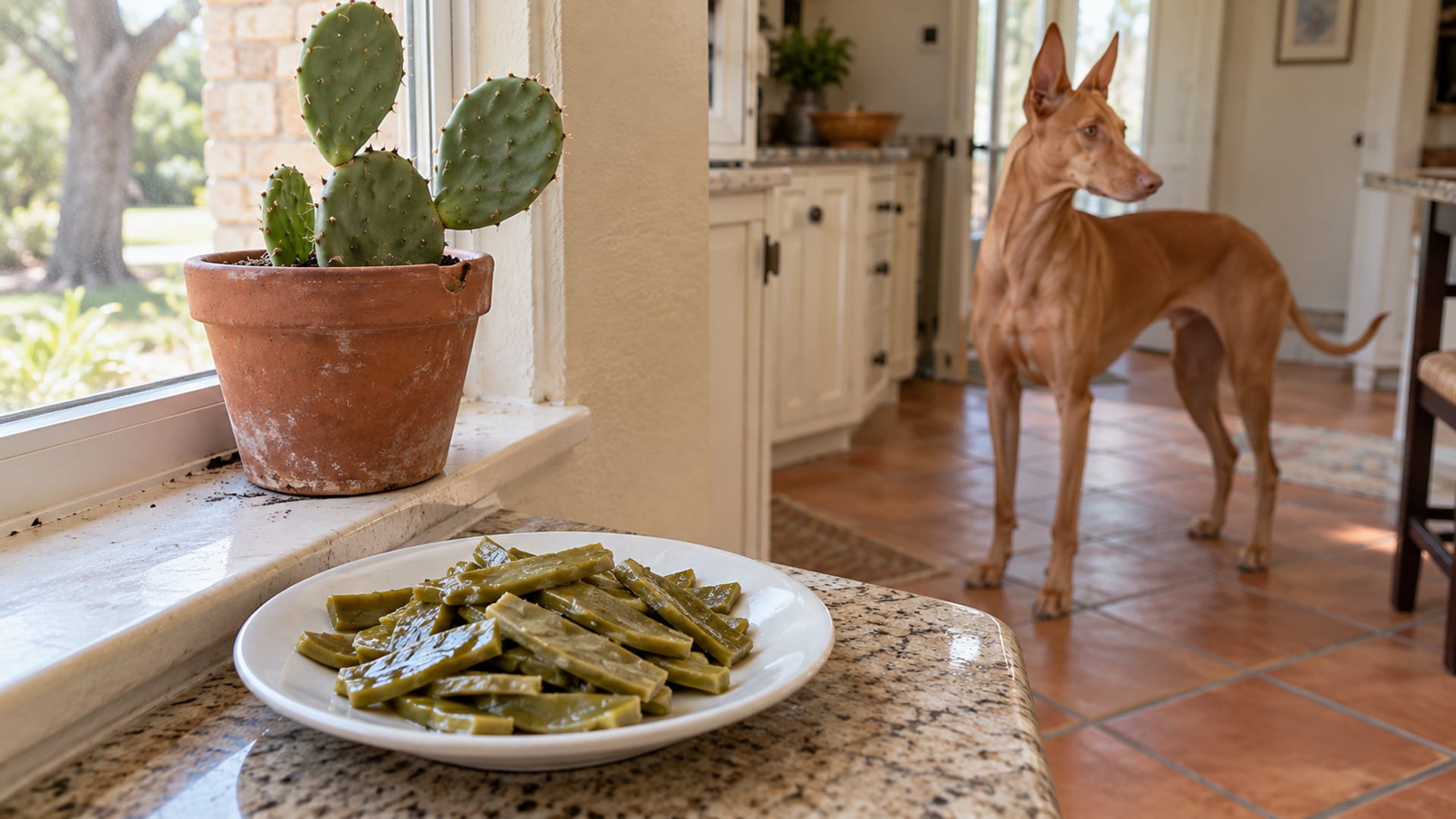
Caution. A correctly identified true cactus, such as prickly pear or Christmas cactus, is listed as non-toxic to dogs, but its spines and tiny hair-like glochids can injure the mouth, throat, skin and eyes. If your dog just bit into one, check the plant and your dog's face first, and call your vet if you find spines in the mouth or eyes, see drooling, gagging, squinting or trouble swallowing, or can't name the plant.
That answer holds only for plants you can identify. The ASPCA lists *Opuntia* tree cactus, the prickly pear and nopal group, as non-toxic to dogs, and the ASPCA's Christmas cactus entry gives *Schlumbergera bridgesii* the same listing. The plant sold as pencil cactus is usually a *Euphorbia*, and Pet Poison Helpline says its milky sap irritates the mouth, stomach and intestines, skin and eyes.
Key takeaways
Tap a card to bring it forward.
- Prickly pear (*Opuntia*) and Christmas cactus are listed as non-toxic to dogs; the danger from them comes from spines and glochids.
- Spines or glochids in the mouth, nose, paws or eyes, or drooling, gagging, squinting or trouble swallowing, are reasons to call your vet now.
- Pencil cactus is usually a *Euphorbia* with irritating milky sap, and peyote or San Pedro is a separate risk, so call about these or any plant you can't name.
- In a published case series, eye discomfort from prickly pear glochids took a median of 21 days to settle.
- Any cactus shared as food has to be a known edible type with every spine and glochid removed.
What to do right now if your dog chewed a cactus
Go through these in the order I'd follow them; each gives your vet something they'll ask for.
- Figure out which plant it was. Photograph the whole plant, and if you can grab a piece without getting stuck, bring it in a bag. Pet Poison Helpline recommends a sample or photos, because one common name often covers plants with very different risks.
- Check the mouth, nose, paws and eyes. Look for large spines and for glochids, the tiny barbed hairs on prickly pear pads and fruit. Where they are matters more than how much was eaten, since one glochid in the eye can be serious in a dog of any size.
- Watch how your dog is acting. Drooling, pawing at the mouth, gagging, coughing, trouble swallowing, vomiting, squinting and tearing suggest something is stuck or has scratched the eye.
- Call your vet or a pet poison line when the risk is higher. That means visible spines in the mouth, throat, nose, paws or eyes; any eye signs; breathing or swallowing trouble; repeated vomiting; weakness or odd behavior; a plant you can't identify; or one that might be pencil cactus, peyote or San Pedro. Pet Poison Helpline advises bringing a pet that already has symptoms to the closest veterinary hospital right away.
- Hold off on home treatment and medicine. Pet Poison Helpline's guidance is to give nothing until a vet or poison professional says to. Have the time, a rough amount, your dog's weight and the signs you've seen ready for the call.
If you're sure the plant was a prickly pear or Christmas cactus, your dog is acting normally and you can't find a spine anywhere, poison treatment probably isn't needed. Keep checking the mouth and eyes over the coming days, and call if any sign appears.
Which cactus plants and forms matter for your dog
The plant's identity decides which row below applies, so check the label or a photo before you settle on one.
Tap or hover a row to highlight it.
| Plant or form | What it usually is | Main concern for a dog |
|---|---|---|
| Plant or formPrickly pear, nopal, tuna, tree cactus, cholla | What it usually is*Opuntia* or related cacti | Main concern for a dogListed non-toxic by the ASPCA; spines and glochids injure the mouth, skin and eyes |
| Plant or formChristmas and Easter cactus | What it usually is*Schlumbergera bridgesii* | Main concern for a dogListed non-toxic by the ASPCA |
| Plant or formMistletoe cactus | What it usually is*Rhipsalis cassutha* | Main concern for a dogListed non-toxic on the ASPCA dog plant list |
| Plant or formPencil cactus, pencil tree, African milkbush | What it usually is*Euphorbia*, not a true cactus | Main concern for a dogMilky sap irritates the mouth, gut, skin and eyes; call |
| Plant or formPeyote and San Pedro | What it usually is*Lophophora williamsii* and *Echinopsis pachanoi* | Main concern for a dogMay contain mescaline; call |
| Plant or formDried cactus | What it usually isOften unidentified | Main concern for a dogGlochids may still be present; treat as unsafe |
| Plant or formJuice, powder, extracts, capsules | What it usually isSpecies and added ingredients vary | Main concern for a dogCheck the label and call |
The mistletoe cactus listing comes from the ASPCA dog plant list. Even *Opuntia* pads that look spineless can still carry glochids, according to the University of Nevada, Reno Extension, so a smooth-looking pad isn't proof it's clean. The South Australian Department of Primary Industries and Regions describes spines and glochids as a risk to the eyes, skin, airway and lining of the mouth. Peyote is its own case: Pet Poison Helpline's review of illicit drugs names mescaline as its active ingredient.
Sharing nopales or prickly pear, and how much is a concern
If you cook nopales, it's natural to wonder whether your dog can have a bite. The lower-risk version is a known edible *Opuntia* pad or fruit with every spine and glochid removed, the same standard the University of Nevada, Reno Extension sets for people preparing it as food. Raw, uncleaned pads and fruit shouldn't go to a dog at all.
Dogs don't have a set serving size for cactus, so I wouldn't treat any amount as standard. If you'd like to share a little cooked, cleaned nopal, ask your vet first and keep it plain.
On the risky side, where a spine lands can matter more than how much went down, and one glochid in the eye can take weeks to settle. For dried cactus, supplements or any plant you can't name, give the vet or poison line your dog's weight, how much was eaten and when, and bring the package or a piece of the plant. The Merck Veterinary Manual notes that many plants are harmless in small quantities while highly toxic varieties and large ingestions can be life-threatening, which is why identity and amount get asked about together.
Signs to watch for, and how long they last
Cactus injuries usually show up right away or soon after contact, because the damage happens the moment the dog bites or brushes the plant. Watch for mouth pain, drooling, pawing at the face, gagging, coughing, trouble swallowing, vomiting, diarrhea, sore skin, squinting, tearing or red eyes.
Eye injuries are the slow ones. A 2019 case series from Texas, listed on PubMed, followed three dogs and one cat with *Opuntia* glochids in the conjunctiva and cornea, the clear front of the eye. Their discomfort took a median of 21 days to resolve, with a range of 10 to 51 days, and removing the glochids surgically was difficult. None had vision-threatening complications at the last follow-up, though one dog had epithelial downgrowth, a healing complication, at a 108-day check. If your dog squints or tears after cactus contact, have the eye examined even if it seems to be improving.
Pencil cactus sap can irritate the mouth, gut, skin and eyes, and cactus containing mescaline may cause behavior changes and neurologic signs. Pet Poison Helpline's toxin trends page also points out that mild early signs don't always predict the outcome, since some exposures are noticed only minutes or hours later. The worst realistic outcomes are corneal ulcers, glochids that stay in the eye, serious mouth or throat injury, aspiration or a blockage, infection, and real poisoning when the plant turns out to be something else.
My dog ate cactus before and was fine
If your dog has chewed a cactus before and came through fine, that happened, and I'd take it at face value. It just can't tell you what this plant or this bite will do, and it says even less about another dog.
A lot can line up in a dog's favor. It may have eaten very little, or only soft inner flesh. It may have swallowed no spines, and the ones it touched may have missed the eyes and throat. The plant may have been a listed non-toxic species, or signs may have been too mild to notice. Pet Poison Helpline names the amount, the animal's size and allergies among the things that shape a plant exposure. The next plant might be a pencil cactus on a windowsill, and the next glochid might land in an eye.
Plants and products that get called cactus
Common names cause most of the mix-ups. Prickly pear, nopal, tuna, Indian fig, tree cactus and cholla can refer to *Opuntia* or related cacti, while Christmas and Easter cactus are commonly tied to *Schlumbergera bridgesii*. Pencil tree, African milkbush, finger tree, petroleum plant and rubber euphorbia usually mean a *Euphorbia*. Living rock cactus may be *Pleiospilos bolusii*, an African plant that mimics stones.
Cactus fruit products, powders, supplements and extracts may hold different species, sugar, preservatives or concentrated plant material. The ASPCA's article on succulents makes a related point: a non-toxic listing doesn't make a plant harmless, and common names overlap. If the spiky plant in your yard turns out to be another succulent, the Agave entry covers that one. When you move into a new home, Pet Poison Helpline's yard and garden advice suggests identifying the plants already growing there.
Check what you learned
Three quick questions to see what stuck.
Quick check
Questions about dogs and cactus
A few more questions come up once the first scare has passed.
Is Christmas cactus poisonous to dogs?
The ASPCA lists Christmas cactus, *Schlumbergera bridgesii*, as non-toxic to dogs. Holiday plants are often sold under loose names, so check the tag or scientific name, and call your vet if your dog shows any signs after chewing it.
Can cactus hurt my cat too?
Yes, in the same physical way. The ASPCA lists *Opuntia* and Christmas cactus as non-toxic to cats, but spines and glochids still injure them, and the Texas eye-injury case series included one cat.
Does my dog's size or age change the risk?
Size affects how much a given amount matters, but a glochid in the cornea can be serious in any dog. Tell your vet your dog's age, weight and health conditions so they can judge your dog's case.
Can my dog have nopal juice, cactus powder or a cactus supplement?
Treat these as separate products from the plant. The species, strength and added ingredients vary by brand, so bring the package to your vet before giving any, and call if your dog got into one on its own.
Is bunny ears cactus safer because it has no big spines?
Bunny ears is an *Opuntia*, and even *Opuntia* that look spineless can carry glochids. Those tiny barbs are the part most likely to end up in a dog's lips or eyes, so treat it like any prickly pear.
Sources
Checked September 25, 2026.
- ASPCA, Toxic and Non-Toxic Plants: Tree Cactus
- ASPCA, Toxic and Non-Toxic Plants: Christmas Cactus
- ASPCA, Toxic and Non-Toxic Plant List: Dogs
- ASPCA, Are Succulents Safe to Have Around Pets?
- Pet Poison Helpline, Pencil Cactus
- Pet Poison Helpline, This Plant or That Plant?
- Pet Poison Helpline, Approaching an Unknown Plant Exposure
- Pet Poison Helpline, Toxin Trends
- Pet Poison Helpline, How to Poison Proof Your Home: Yard and Garden
- Pet Poison Helpline, It's Not Just Marijuana Anymore: A Review of Illicit Drugs
- PubMed, Cactus-induced keratoconjunctivitis in Texas: A case series of three dogs and one cat
- University of Nevada, Reno Extension, Eating Cactus: Prickly Pear for Food
- South Australian Department of Primary Industries and Regions, Opuntioid Cacti Manual
- Merck Veterinary Manual, Houseplants and Ornamentals Toxic to Animals