

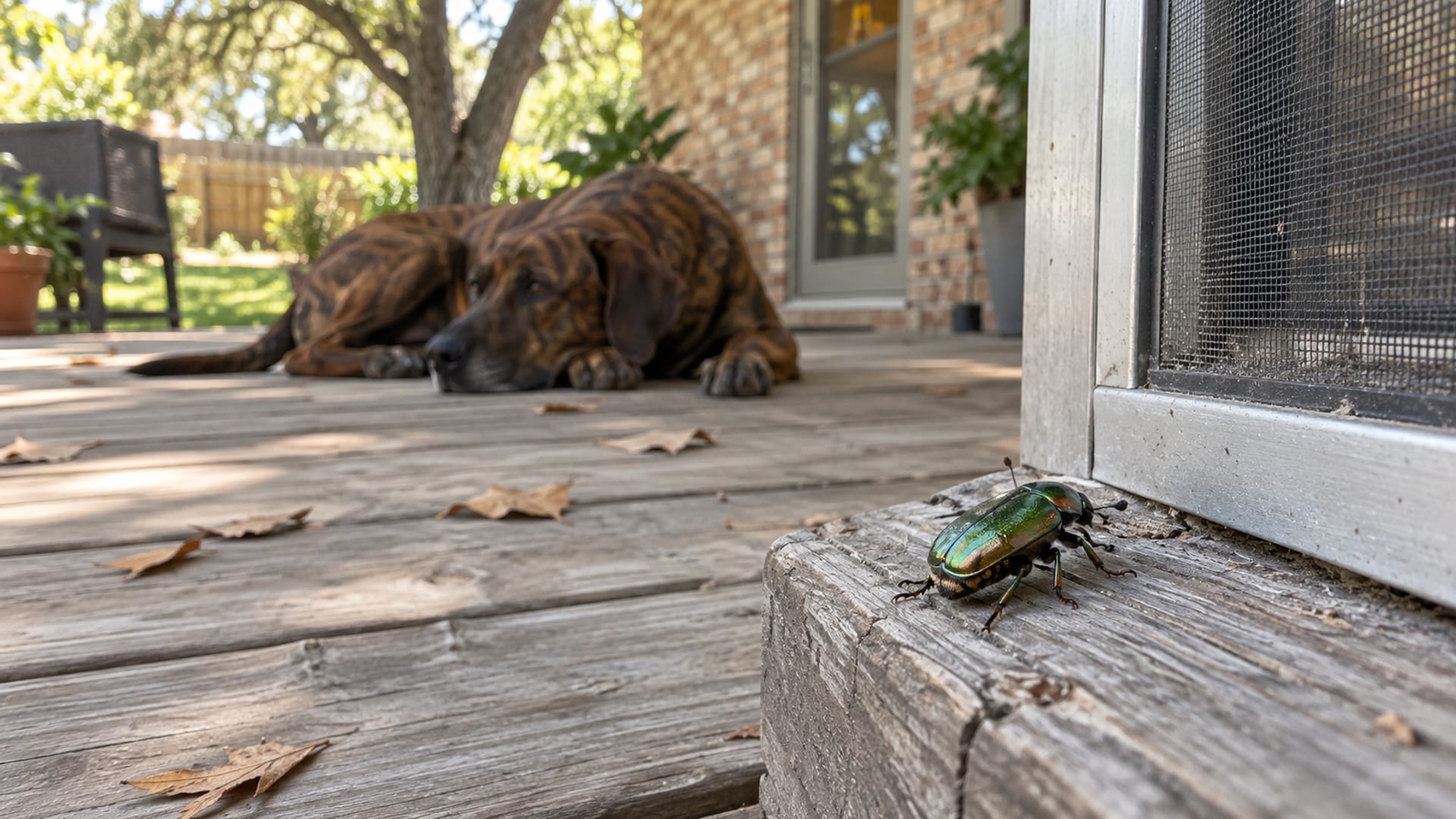
Bugs call for caution, because the answer turns on which bug it was and how many went down. One ordinary insect that doesn't sting, like a housefly or a moth, often causes no serious problem, while bees, wasps, hornets, yellow jackets, fuzzy or processionary caterpillars, Asian lady beetles, bugs touched by pesticide, nests and big mouthfuls of insects are the ones that hurt dogs.
If you just watched it happen, work out what the bug was and look in your dog's mouth.
Key takeaways
Tap a card to bring it forward.
- One ordinary nonstinging bug, like a fly or moth, often causes no serious problem.
- Bees, wasps, hornets, yellow jackets, fuzzy or processionary caterpillars, Asian lady beetles and sprayed bugs are higher risk.
- Call right away for a mouth or throat sting, facial swelling, hives, trouble breathing, collapse, heavy drooling, pawing at the mouth or repeated vomiting.
- Fleas can pass on tapeworm and kissing bugs can pass on Chagas disease, and neither shows up the same day.
- Commercial insect-protein dog food is a formulated product, judged by its label.
What to do if your dog just ate a bug
Four questions decide how urgent this is: what kind of bug, how many, whether anything stung or was sprayed, and whether your dog shows any signs.
- Figure out what it was. Check the spot for more of the same bug and take a photo. A photo and a description help your vet more than a common name, since names change from place to place.
- Look in the mouth and at the face. A sting inside the mouth or throat is the fast danger. The Merck Veterinary Manual says pain and swelling from bee, wasp, hornet and ant stings can start within minutes, and hives can appear just as fast.
- Think about how many. One moth is a small matter, while a nest or a mass of insects can also be a choking risk.
- Ask whether the bug was sprayed. The Pet Poison Helpline notes that a swallowed insect can carry pesticide, which adds its own poisoning risk.
- Call right away for the danger signs. That means a mouth or throat sting, facial swelling, hives, trouble breathing, weakness or collapse, heavy drooling, pawing at the mouth, trouble swallowing, repeated vomiting or bloody diarrhea. Call too for any fuzzy, spiny or processionary caterpillar, several stings, a nest, pesticide contact or a suspected kissing bug.
- Watch the plain cases, and skip home remedies. One small bug that doesn't sting and a dog acting normal doesn't automatically need emergency care; keep watch and call if anything changes. Give no medicine unless your vet says to.
Which bugs are low risk and which need a call
The word "bugs" covers everything from a housefly to a hornet, so the risk sits with the kind of insect.
Tap or hover a row to highlight it.
| Bug | Main concern | What to do |
|---|---|---|
| BugHousefly, moth or other plain nonstinging insect | Main concernUsually low risk in a small accidental amount | What to doWatch; call if signs show up |
| BugBee, wasp, hornet, yellow jacket | Main concernStings in the mouth or throat, allergic reaction | What to doCall right away |
| BugFuzzy, spiny or processionary caterpillar | Main concernHairs that injure the mouth and tongue | What to doCall right away |
| BugAsian lady beetle | Main concernSecretion that sticks to the mouth and can cause ulcers | What to doOne or two: watch; more, or any signs: call |
| BugCicadas or large beetles in numbers | Main concernVomiting, belly pain, blockage, bloody diarrhea | What to doA few: watch; many, or any signs: call |
| BugFlea | Main concernTapeworm later | What to doTell your vet; check the stool |
| BugKissing bug | Main concernChagas parasite that can affect the heart | What to doCall your vet |
| BugAny bug touched by pesticide | Main concernPoisoning from the spray | What to doCall right away |
The common bugs, one at a time
Each of these carries its own kind of risk.
Bees, wasps, hornets and yellow jackets. Honeybees generally sting once and can leave a stinger, while wasps, hornets and yellow jackets can sting again and again. The Pet Poison Helpline points out that even a recently killed wasp can sting the mouth or throat of the dog that swallows it.
Caterpillars. Some carry hairs that irritate or inject venom into the mouth, throat, stomach, eyes and skin, and the pine processionary caterpillar is the worst of them. In a study of 41 dogs exposed to it, every dog had drooling, trouble swallowing, swollen glands under the jaw and pain, and many developed tongue necrosis, meaning part of the tongue died. A case report on DOAJ describes severe stomach erosion in a dog that swallowed the hairs.
Ladybugs and Asian lady beetles. The AKC says ordinary ladybugs are generally not poisonous but treats the invasive Asian lady beetle separately. Its defensive liquid can stick to the mouth and burn it, which a report in Toxicon documented as corrosion of a dog's mouth lining.
Cicadas. The AKC's cicada article says a few cicadas usually cause no problem, but a dog that gorges during an emergence can get serious stomach and gut trouble. Our Cicadas entry covers that season.
Stink bugs and walking sticks. "Stink bug" covers many different insects, and some can irritate the mouth, eyes or stomach. The ASPCA lists some walking sticks among the bugs that release foul or irritating chemicals.
Fireflies. The ASPCA's firefly warning is aimed at pet lizards. For a dog that snaps up one lightning bug, treat it like any other ordinary bug: watch, and call if signs appear.
Fleas. The CDC explains that dogs get *Dipylidium caninum* tapeworm by swallowing an infected flea.
Kissing bugs. Also called assassin bugs or cone-nose bugs, these can carry *Trypanosoma cruzi*, the parasite behind Chagas disease. CDC research from Tucson, Arizona describes dogs becoming infected by chewing infected bugs, so tell your vet even if your dog seems fine.
How many bugs is too many?
On the lower-risk side, a stray fly or moth needs nothing from you beyond watching your dog. It still isn't a snack. Wild-caught bugs shouldn't be fed on purpose, because nobody knows the species, whether it was sprayed or whether it carried a parasite.
For the risky bugs, there's no count per pound of body weight that marks a safe line. Merck describes sting severity by how many stings, where they land, the species, the amount of venom and how sensitive the dog is. The ASPCA says one or two Asian lady beetles are unlikely to be a major problem while larger numbers can hurt the mouth or stomach, and the case the AKC describes involved a dog that ate about 16.
A small dog takes a bigger relative hit from the same number of stings or bugs. Instead of guessing, call your vet with your dog's weight, what the bug looked like, roughly how many, whether anything stung, and when it happened.
Signs to watch for over the next hours
Most trouble from a single bug shows up soon, while a few risks take much longer.
- Stings: pain and swelling within minutes, sometimes hives. Merck lists severe reactions such as facial or airway swelling, collapse, vomiting, diarrhea, seizures and shock, and later anemia or kidney or liver failure.
- Asian lady beetles: drooling, pawing at the mouth, drowsiness, mouth sores or vomiting. The sores may last until treated.
- Caterpillars: drooling, head shaking, pawing at the mouth, trouble swallowing, vomiting, diarrhea and tongue sores.
- Cicadas and large beetles in numbers: vomiting, belly pain or bloody diarrhea, and trouble passing stool if the shells cause a blockage.
- Fleas: tapeworm shows up later, often as rice-like segments around the rear end or in the stool.
- Kissing bugs: Chagas infection can be silent at first and affect the heart later.
My dog has eaten bugs before and was fine
That happened, and plenty of dogs spend whole summers snapping at flies with no trouble. It just doesn't carry over to the next bug or the next dog. The bug may have been a harmless kind, the bee may never have stung, and the flea may not have carried tapeworm.
The amount changes things, since one cicada and forty are different meals. A small dog gets more from the same exposure. The species matters most, because a housefly and a processionary caterpillar share little beyond legs. A bug from a sprayed yard adds pesticide. Merck notes that allergic reactions to stings vary between animals, so earlier stings that passed quietly don't predict the next one. And tapeworm and Chagas don't show up the same day, so "fine that night" says little about them.
Puppies deserve a closer eye, since they swallow more of what crawls past.
Bug names that get mixed up, and insect-protein dog food
A photo beats a common name every time, because a few names cause most of the confusion.
- Ladybug and Asian lady beetle look alike, but the invasive Asian lady beetle has the irritating secretion.
- Kissing bug, assassin bug and cone-nose bug may all point to the insects that can carry the Chagas parasite.
- The bug and the bug spray are separate questions; a sprayed insect needs a call about the spray itself.
Mealworms, crickets, grasshoppers and black soldier fly larvae also show up in commercial dog foods and treats. A review in Veterinary World looked at those formulated, farm-raised insect diets, so judge them by their label and check bug snacks for salt, spices and preservatives.
Check what you learned
Three quick questions on the calls that matter most.
Quick check
Questions about dogs and bugs
A few more things owners ask once the first worry has passed.
Why do I find more lady beetles indoors in winter?
The ASPCA says Asian lady beetles commonly move into homes during winter, right where a bored dog can find them. If they cluster on windowsills, sweep them up before your dog does.
What if a stink bug sprays my dog's eyes?
Call your vet. A study in Veterinary Ophthalmology documented acid burns to the eyes of dogs and cats from the Bronze Orange Bug, an Australian stink bug, with 75.7% of cases in summer. Eye injuries from a defensive spray need an exam.
Can my cat get sick from the same bugs?
Cats face many of the same risks from stings, caterpillars, Asian lady beetles, pesticides and parasites. The ASPCA discusses dogs and cats together for caterpillars and lady beetles, so the same calls apply.
Should a dog with other health problems be seen sooner?
A dog already dealing with pancreatitis, kidney disease or another serious illness may have less in reserve if a bug causes vomiting or a reaction. With a dog like that, I'd make the call earlier instead of waiting to see.
Sources
Checked September 25, 2026.
- Merck Veterinary Manual, Wasp, Bee, and Ant Stings to Animals
- Pet Poison Helpline, Bee and Wasp Sting Toxicity in Pets
- ASPCA Animal Poison Control Center, Bad Bugs, Bad Bugs: What You Should Do to Keep Your Pets Safe
- American Kennel Club, What to Do if Your Dog Eats Ladybugs
- American Kennel Club, Can Dogs Eat Cicadas? Why Eating Cicadas Can Endanger Your Pet
- Veterinary Record via PubMed, Effects of pine processionary caterpillar Thaumetopoea pityocampa contact in dogs: 41 cases
- DOAJ, Acute erosive gastritis due to pine processionary caterpillar setae ingestion in a dog
- Toxicon via PubMed, Acute corrosion of the oral mucosa in a dog due to ingestion of Multicolored Asian Lady Beetles
- Veterinary Ophthalmology via PubMed, Ocular findings in dogs and cats following chemical injury by the Bronze Orange Bug
- CDC, About Dog or Cat Tapeworm Infection
- CDC Emerging Infectious Diseases, Infection of Kissing Bugs with Trypanosoma cruzi, Tucson, Arizona, USA
- Veterinary World, Insect-based diets for companion animals