

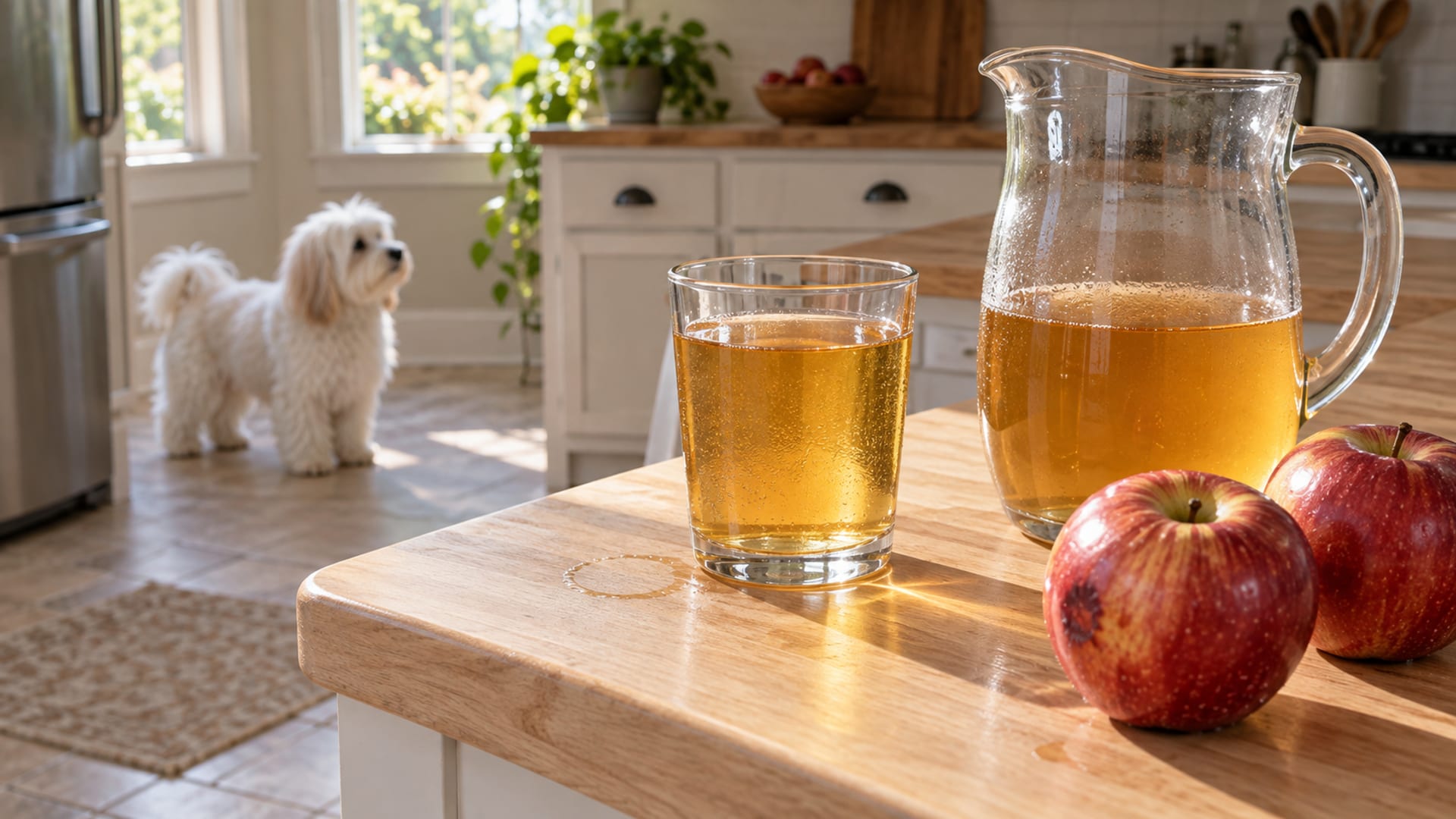
Caution. A few sips of plain apple juice are not known to be toxic to dogs, but it's a sugary drink with very little fiber, and water is the better everyday choice. If your dog already drank some, pick up the container and read the ingredient list, because juice drinks, sugar-free versions and hard cider can carry xylitol, grape juice or alcohol.
When the label shows plain juice and your dog is acting normally, put the rest away and keep an eye on them. When the label lists one of those riskier ingredients, or you can't tell what was in the cup, call your vet or a pet poison line now, before any signs show up.
Key takeaways
Tap a card to bring it forward.
- A small amount of plain, unfermented apple juice is not known to be toxic to dogs.
- The ingredient list decides the risk: xylitol, grapes or raisins, alcohol, caffeine or chocolate mean call now.
- A larger amount of plain juice can bring loose stool, vomiting, belly discomfort or extra thirst.
- Hard cider, apple cider vinegar and apple seeds are separate questions from the juice.
- Water is the everyday drink; a small piece of plain apple without the core or seeds is the better way to share.
What to do if your dog just drank apple juice
Work through these in order. The first four usually take a couple of minutes and tell you whether tonight is a watch-at-home night or a phone call.
- Move the cup, box or bottle out of reach, and keep it. Your dog can't drink more, and the container answers the first questions anyone you call will ask.
- Work out what the product is. A 100% juice, a juice drink, a hard cider and a smoothie look alike in a glass but don't carry the same risk.
- Estimate how much is gone. A lick from a spill differs from a whole juice box, and the same amount counts for more in a small dog.
- Read the ingredient list line by line. Look for xylitol, grape or raisin juice, alcohol, caffeine and chocolate; "sugar-free" on the front doesn't tell you which sweetener replaced the sugar.
- Look at your dog. Vomiting, weakness, wobbling or fast breathing change the plan even when the label looks fine.
For a small amount of plain juice and a dog acting normally, neither the ASPCA Animal Poison Control Center nor the Merck Veterinary Manual treats apple juice as a poison, so stopping access and watching is the usual plan.
- The product lists xylitol, grapes or raisins, alcohol, caffeine or chocolate, or an ingredient you can't identify.
- Your dog drank a large amount, especially a puppy, a very small dog or a dog with a serious medical condition.
- Your dog also chewed apple seeds, stems or leaves.
- You see collapse, weakness, trouble breathing, fast breathing, bright or brick-red gums, seizures, repeated vomiting, severe diarrhea or strange behavior.
Have the container, your dog's weight and your best guess at the amount ready when you call.
Which apple drinks and apple parts cause trouble
Apple comes into the house in a lot of forms, and each one lands a little differently.
Tap or hover a row to highlight it.
| Form | What matters for your dog |
|---|---|
| FormPlain 100% apple juice | What matters for your dogA small amount only; sugary, very little fiber |
| FormApple juice concentrate | What matters for your dogSugar and calories packed tighter; read the label |
| FormJuice drinks, punch, smoothies | What matters for your dogCheck for xylitol, grapes or raisins, alcohol, caffeine, chocolate, onion or garlic |
| FormSugar-free apple juice or drinks | What matters for your dogFind the sweetener; xylitol means call now |
| FormSweet cider (nonalcoholic) | What matters for your dogTreat like apple juice once you know it isn't fermented |
| FormHard cider | What matters for your dogContains alcohol, which is toxic to dogs |
| FormApple cider vinegar | What matters for your dogA different product; the juice answer doesn't carry over |
| FormApple flesh, raw or plainly cooked | What matters for your dogGenerally safe in moderation, core and seeds removed |
| FormSeeds, stems and leaves | What matters for your dogAvoid; they contain cyanogenic glycosides |
| FormApple core | What matters for your dogAvoid; choking and blockage risk |
The fiber gap is large but not total. The USDA National Agricultural Library fiber table lists apple juice concentrate at 0.4 grams of fiber in its listed serving, and cloudy or unfiltered juice may hold a little more.
The hazard people link with apples sits in the plant parts. The ASPCA names the stems, leaves and seeds as the parts with cyanogenic glycosides, compounds that can release cyanide when chewed or crushed. Cyanide keeps cells from using oxygen, as the Merck Veterinary Manual's cyanide page explains. Strained juice isn't one of those parts.
How to share apple, and when an amount is worth a call
If you want your dog to have some apple, the fruit works better than the juice. Pet Poison Helpline describes raw and cooked apple flesh as safe for pets in moderation once the core and seeds are out, and the American Kennel Club treats it as a moderate treat with stems and seeds removed. Wash the apple, cut a small piece of plain flesh, and put the core and seeds in a trash can your dog can't open. Our Apples entry has more.
If you still want to pour a little juice, keep it to a very small amount of plain, unfermented juice with nothing added, and never in place of the water bowl. The veterinary sources don't publish a serving size by weight, so I'd treat juice as an occasional taste and leave it there.
There's also no chart that turns ounces of juice into a safe or unsafe line. A lick or a few sips of plain juice in a healthy dog isn't treated as an emergency by the sources above, while a larger amount raises the chance of an upset stomach, more so in a small dog. When the amount feels like a lot for your dog's size, call and give your dog's weight and roughly how much is missing.
Seeds follow their own rules. The ASPCA's fall toxins advice says a couple of swallowed seeds are unlikely to cause harm, and Merck notes that apples grown for people have very low cyanide levels in their seeds, so poisoning is rare. A dog that chewed through many seeds or a pile of cores is still a call-now case, for the seeds and because cores can cause choking or a blockage.
Puppies and dogs with diabetes, extra weight or a prescribed diet are poorer candidates for sugary drinks, so ask your vet about the label before sharing. In a controlled PLOS ONE study, prolonged feeding of a high-fat, high-fructose diet changed how dogs handled insulin. That was long-term feeding, not an occasional sip, but it's one reason juice makes a poor habit.
Signs to watch for after apple juice
After a small amount of plain juice, many dogs show nothing at all. A bigger drink usually brings a temporary upset stomach: loose stool, vomiting, belly discomfort or more thirst than normal. In a dog who is otherwise bright and drinking water, watch those signs and mention them to your vet if they don't settle.
Weakness, wobbling, collapse, seizures, repeated vomiting, severe diarrhea, fast or labored breathing, and bright or brick-red gums point past a sugary upset. They can mean the drink held xylitol or alcohol, or that your dog also got into seeds, stems or leaves, and they call for a phone call right away.
When chewed seeds or plant parts are involved, signs can come fast. The Merck Veterinary Manual reports onset often within 10 to 60 minutes for cyanide-producing plants, and its cyanide poisoning page describes signs from 15 to 20 minutes up to a few hours, including breathing trouble, collapse and seizures. That speed is why a large chewed-seed exposure is an emergency, while a few whole seeds usually aren't.
My dog drank it before and was fine
That probably happened just the way you remember. Plenty of dogs lap up a spilled juice box with no trouble. It still doesn't make every apple drink safe for every dog, because several things shift from one time to the next:
- The amount. Last time might have been a lick, this time a full cup.
- The product. The same cup can hold 100% juice one day and a sugar-free drink or hard cider the next, and brand formulas change.
- Your dog's size. A small dog takes in more juice per pound from the same sips.
- The individual dog. Stomach sensitivity and underlying health differ from dog to dog.
- Whole or chewed seeds. Pet Poison Helpline explains that cyanide-containing seeds generally have to be chewed or crushed, in quantity, before poisoning is expected.
- Signs nobody saw. Mild vomiting in the yard or a swallowed seed can go unnoticed.
That good night was real, and tonight's label is still the thing to check.
Juice boxes, ciders and other apple look-alikes
Most of the confusion comes from package names. "Cider" can mean nonalcoholic apple juice in the United States, but hard cider is alcoholic, the same concern covered on our Beer entry. Apple cider vinegar is a different fermented product, so the juice answer doesn't apply to it.
Apple-flavored drinks and kids' punches often aren't 100% juice, and a mixed fruit drink can include grape juice, which carries its own kidney concern; see our Grapes and raisins entry. Smoothies can hold grapes, raisins, dairy, sweeteners or blended seeds. Apple tea may contain caffeine, covered on our Tea entry. Apple pectin and pomace are processed ingredients, not juice.
Mott's, Martinelli's, Simply Apple, Tree Top and Juicy Juice all sell apple products, and formulas change, so read the bottle you actually have.
Check what you learned
Three quick questions on the points that matter tonight.
Quick check
Questions about dogs and apple juice
A few follow-ups come up once the first worry passes.
Can puppies drink apple juice?
A sip is a bigger dose for a puppy's small body than for a grown dog, and puppies are poorer candidates for sugary drinks. If a puppy drank a substantial amount, call your vet with the puppy's weight and the label in hand.
My dog has diabetes. Should I avoid apple juice?
Ask the vet who manages your dog's diabetes, and bring the nutrition panel, since the sugar matters more for them than for a healthy dog. After an accidental sip, watch closely and call if anything seems off.
Is it the same for my cat?
The ASPCA lists the apple plant's stems, leaves and seeds as toxic to cats as well as dogs. Plain juice isn't named as a cat poison, and the same label checks apply. Merck notes cats are believed to be more sensitive than dogs to some toxic plants.
Is cloudy or unfiltered juice better for dogs?
It may carry a little more fiber than clear juice, but it's still sugary. Xylitol, grape juice and alcohol have nothing to do with whether a juice is cloudy, so read the label either way.
Sources
Checked September 25, 2026.
- ASPCA Animal Poison Control Center, Toxic and Non-toxic Plants: Apple
- ASPCA, Pet Parents: Beware of These Four Fall Toxins
- Pet Poison Helpline, Friendly Fall Foods
- Pet Poison Helpline, Toxin Tails: Apricot Snacks Poison Rural Canadian Puppy
- Merck Veterinary Manual, Houseplants and Ornamentals Toxic to Animals
- Merck Veterinary Manual, Cyanide Poisoning
- American Kennel Club, Breed Columns
- USDA National Agricultural Library, Total Dietary Fiber
- PLOS ONE, A high-fat and fructose diet in dogs mirrors insulin resistance and β-cell dysfunction characteristic of impaired glucose tolerance in humans