

Why Do Dogs Chase Their Tails: Normal Play, Warning Signs and What to Do
By Cal Hewitt · Published , updated
Health
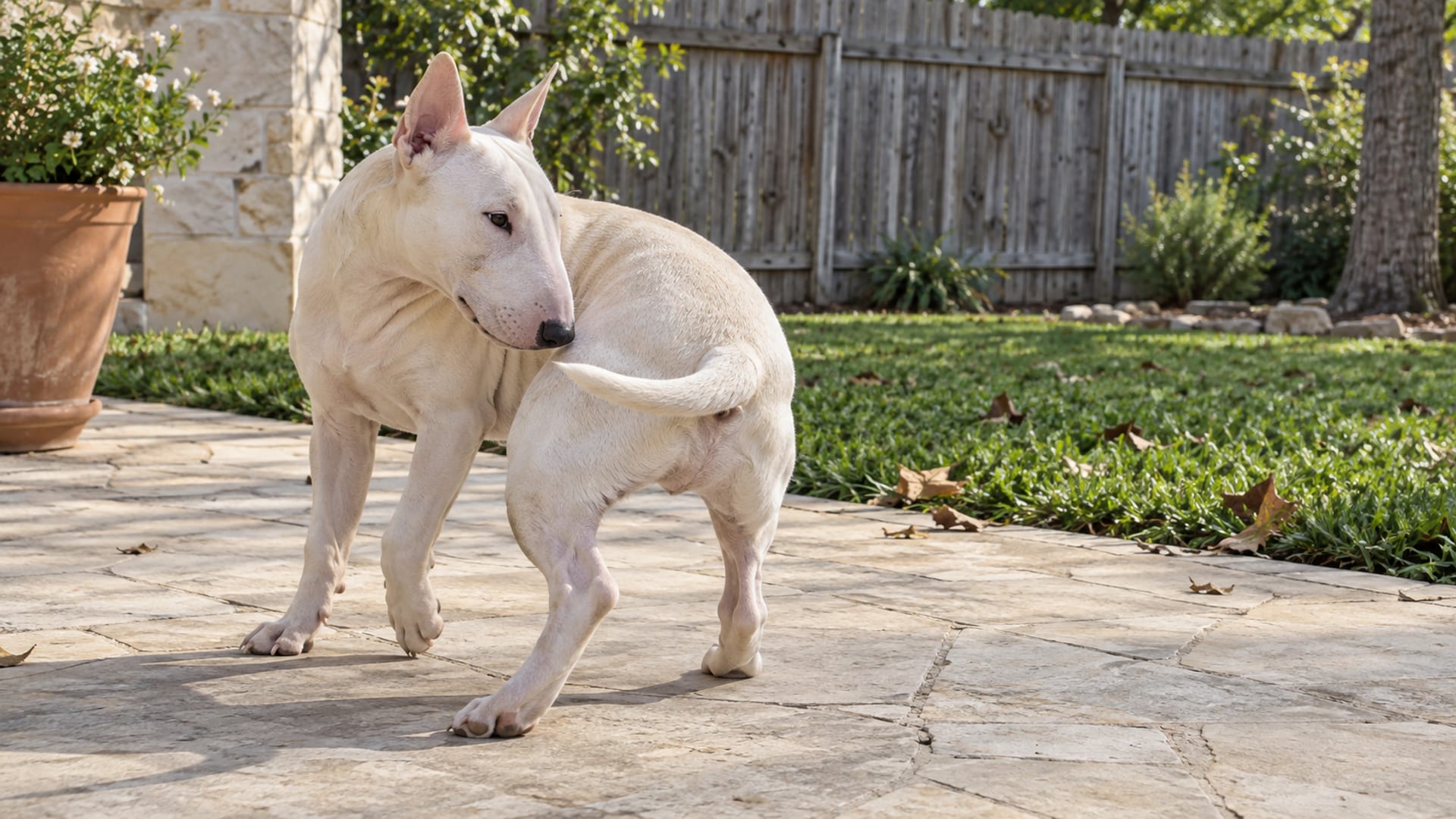
Dogs may chase their tails briefly as puppy play, curiosity, excitement, or a way to get your attention. It becomes more concerning when it is frequent, intense, hard to interrupt, newly started, or comes with biting, hair loss, skin damage, pain, or changes in eating and normal activity. Fleas, allergies, parasites, anal gland discomfort, a tail injury, pain, nerve problems, stress, and canine compulsive disorder are all possible explanations. Watch when it happens, take a video, and don't punish your dog. If the tail is hurt, you can't interrupt the spinning, or it's crowding out normal life, call your veterinarian.
Key takeaways
Tap a card to bring it forward.
- Brief, relaxed tail chasing, especially in puppies, is often play or curiosity.
- Chasing that is daily, intense, hard to interrupt, sudden, or causes injury is a reason to see a vet.
- Itching and pain are common drivers: fleas, allergies, parasites, anal glands, tail injury, and nerve or spine pain.
- Record a video and notes on when, how long, and what set it off. Your vet will use both.
- Redirect calmly and add exercise and mental stimulation. Never punish or yell.
- Canine compulsive disorder is diagnosed only after medical causes are ruled out.
Is occasional tail chasing normal? Puppy play, curiosity and excitement
Often, yes. A puppy who spins for a few seconds, then trots off to find a toy, is usually playing or figuring out its own body. VCA Animal Hospitals describes tail chasing as something that can be part of play, particularly in young dogs, and excitement can set it off in older dogs too, like when you walk in the door.
There is some study evidence behind this. In Burn's 2011 study of 400 YouTube videos, play behavior was mixed in with the tail chasing in 17% of the videos, and it showed up more often in puppies than in older dogs. That study has limits: it used videos people chose to post, made no diagnoses, and can't tell us how common normal or abnormal chasing is overall.
Look at the whole dog. A loose body, a quick stop, and an easy switch to something else point toward play; our dog body language guide helps with relaxed versus tense posture. A happy-looking spin isn't proof, either. The same study found that dogs who kept at it and were hard to distract were less likely to show play behavior.
Could it be boredom, attention, stress or anxiety?
Sometimes the reason is in the dog's day, not its body. The veterinary sources describe three behavioral causes, none to assume until medical causes are considered.
Boredom and too little activity. The Merck Veterinary Manual says repetitive behaviors can develop when a dog's surroundings don't give it enough outlets for normal behavior. Merck lists exercise and mental stimulation suited to the dog's age and breed as a first step for abnormal repetitive behavior. That makes a dull routine a possible contributor, not the explanation for every dog.
Attention. VCA names attention as one reason dogs chase their tails. If you laugh, call out, or rush over every time, that reaction may keep the behavior going. That's not scheming; the spinning simply keeps paying off.
Stress, frustration and anxiety. Merck explains that tail chasing can start as a displacement behavior, something a dog does when it feels conflicted or stressed, and can later become a problem in how often or how hard it happens. The ASPCA describes spinning and tail chasing as examples of compulsive or repetitive behavior that can come from conflict, stress, or anxiety and can lead to self-injury. If the chasing happens around the time you leave, our separation anxiety guide covers what that pattern can look like.
When something itches or hurts: fleas, allergies, anal glands, injury, pain and nerve problems
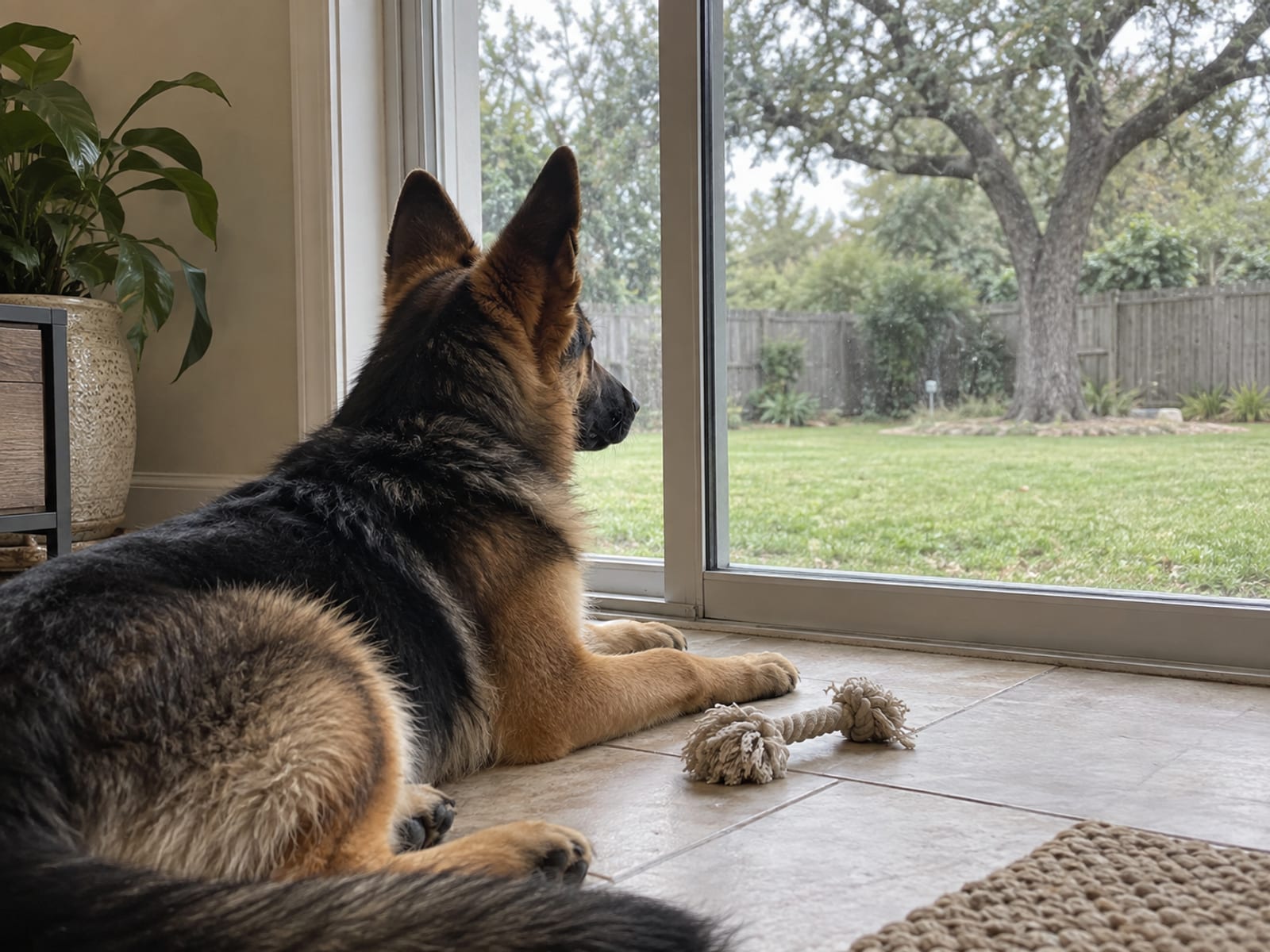
Sometimes a dog is trying to reach a spot that bothers it. VCA and Merck list several medical causes. The signs below explain why your vet may want to examine the tail and rear end; they don't diagnose anything on their own.
- Fleas and allergies. Itching around the rear, licking, chewing, scratching, irritated skin, or hair loss. VCA names fleas and food allergies as possible causes. Our flea guide and our dog allergy guide go further on both.
- Intestinal parasites. VCA mentions tapeworms, which can irritate the area around the rectum and lead to chasing or biting.
- Anal gland problems. Discomfort near the base of the tail or the anus, licking, biting, scooting, or a sudden focus on the rear. VCA lists impacted anal glands as a possible cause.
- Tail injury. A sudden start after the tail was caught in a door, stepped on, cut, or hit, with pain, swelling, bleeding, or tenderness. VCA notes that dogs may chew at painful areas.
- Spine, hip and nerve pain. Merck says tail chasing might point to orthopedic or neurological pain in the lower back and tail. Nerve damage (neuropathy) can cause odd sensations like tingling or numbness, and Merck also lists focal seizures among the possibilities.
- Skin infection and other conditions. When a dog is injuring itself, Merck lists infection, autoimmune disease, parasite allergies, food reactions, and pain among the things to check.
If your dog's tail was docked, mention that history to your vet.
Signs that tail chasing has become a problem
This is where I'd stop watching and start calling. Based on VCA, Merck, and the Burn study, arrange a veterinary visit when:
- The chasing started all of a sudden.
- It happens daily, over and over, or in long episodes.
- Your dog is hard or impossible to interrupt.
- Your dog bites, chews, or wounds its tail.
- You see bleeding, swelling, hair loss, raw skin, discharge, or obvious pain.
- Your dog keeps focusing on its rear end or scooting.
- It began after an injury, a grooming incident, or a possible knock to the tail.
- Your dog skips eating, playing, sleeping, or its usual activities to chase its tail.
- You notice staring, changes in awareness, collapse, unusual movements, or anything that looks like a seizure.
If your dog started chasing all of a sudden, or chases and bites, call your regular vet rather than waiting it out.
Go to an emergency vet for heavy bleeding, severe pain, an open wound, a possible broken tail or other serious injury, collapse, seizure-like activity, or a dog that can't stop and is quickly hurting itself. There is no set number of minutes that makes it an emergency, so if you're unsure, call the clinic.
How often is too often? There is no single cutoff, but "hard to distract" is a useful test. In the Burn study, about 38% of dogs in the posted videos appeared hard to distract. If you call your dog's name or toss a toy and the spinning goes on, that's worth a vet visit.

What to do today: watch, record, protect the tail and redirect calmly
Today's job: gather good information and keep your dog from getting hurt.
Watch and write it down. Note when it happens, how long each bout lasts, how many times a day, and what came right before: visitors, birds outside, you leaving, a burst of excitement. Note whether you can interrupt it. The Merck owner guide on diagnosing behavior problems explains that vets rely on a detailed behavior history, so these notes matter.
Take a video. A short phone clip shows the vet what a description can't, especially if your dog won't do it in the exam room.
Look only as much as your dog allows. Check for hair loss, redness, wounds, swelling, discharge, fleas, or changes near the anus. If your dog pulls away, growls, or seems sore, stop and let the vet do it.
Prevent more injury. If your dog is biting the tail, ask your vet how to protect it before the appointment. Whether a cone or covering is right depends on the wound, so follow their advice.
Redirect calmly and early. If you know the triggers, step in before the spinning starts. Call your dog over, offer a toy, ask for a simple cue, or start a sniffing game. Our positive reinforcement training guide and our beginner's guide to training a dog cover how to teach a cue your dog can switch to.
Cut the accidental reward. If attention seems to keep it going, avoid big reactions right after the chasing starts. Give your attention for the calm behavior you asked for instead.
Add exercise and things to do. Sniff walks, food puzzles, short training sessions, play, and suitable time with other dogs all give a dog outlets. Our walking guide covers how much exercise dogs usually need. Just know that more exercise isn't a diagnosis, and it won't fix itching or pain.
Don't punish. No yelling, chasing, grabbing, or scaring your dog. Merck ties displacement behavior to conflict and stress, and a 2019 review in the Journal of the American Veterinary Medical Association discusses the risks and limits of punishment. Punishment doesn't treat an itch, an injury, a nerve problem, or a compulsive pattern, and it can add fear on top of whatever is already going on.
What the tail-chasing studies found, and what they can't tell you about your dog
A few breeds show up again and again in the research. Three studies are worth knowing, along with what each actually measured.
Moon-Fanelli and colleagues (2011) surveyed owners of 333 Bull Terriers: 145 that chased their tails and 188 that didn't. Tail chasing was linked with sex, trance-like behavior, and episodes of aggression, and males had an 8% greater risk than females. The study didn't show that every tail-chasing Bull Terrier has a compulsive disorder, or that its findings apply to other breeds.
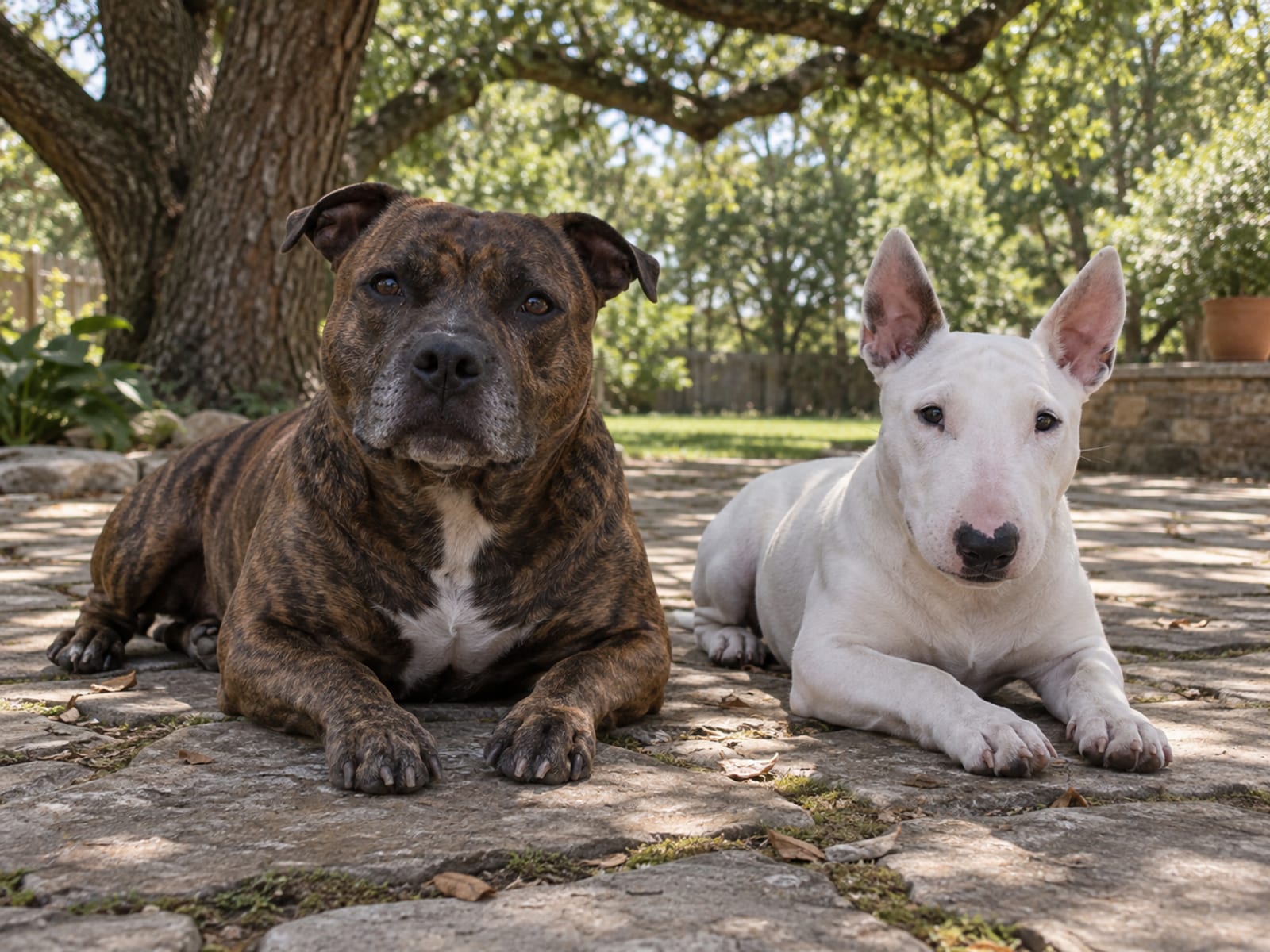
Tiira and colleagues (2012) used owner questionnaires on 368 Bull Terriers, Miniature Bull Terriers, Staffordshire Bull Terriers, and German Shepherds. Owners reported that the chasing usually began at 3 to 6 months in Bull Terriers and German Shepherds, and at 6 to 24 months in Miniature Bull Terriers and Staffordshire Bull Terriers. Diet nutrients, neutering, breed, and the number of dogs at home were linked with tail chasing. Those are associations, not causes, and don't justify changing food or giving supplements.
Burn (2011), the video study from November 2009 through August 2010, found hair loss on the tail or hindquarters in 1.25% of the tail-chasing dogs, and warned that video data carry selection and breed bias.
So, what does this mean for your dog? Breed can raise the odds, but breed alone doesn't mean a disorder, and any dog can chase its tail for the reasons above.
Canine compulsive disorder: how it's evaluated and treated
Merck defines compulsive disorders as repetitive behaviors that can become intense, hard to interrupt, or out of control. It calls the diagnosis one of exclusion. That means a vet looks for medical explanations first, including skin, orthopedic, neurological, digestive, and pain-related causes, before calling tail chasing compulsive.
Evaluation starts with a detailed behavior history, so bring your notes and video. A vet may add a physical exam, lab work, a skin check, imaging, or other tests.
Treatment, per Merck, may include:
- Managing the environment and reducing triggers.
- Exercise and mental stimulation suited to the dog's age and breed.
- Behavior modification, teaching and rewarding a different behavior.
- Preventing repeats of the behavior and self-injury.
- Referral to a board-certified veterinary behaviorist for complex, lasting, or dangerous cases.
- Medication prescribed by a veterinarian when needed. Classes used include selective serotonin reuptake inhibitors (SSRIs), tricyclic antidepressants, and other behavior or anti-anxiety drugs.
I won't give doses; your vet chooses the drug and amount, so give nothing from home. One study of clomipramine in dogs with compulsive disorder, which included dogs that spun, found a treatment effect, but the authors said four weeks of medication was not enough on its own and that behavior modification was likely needed too.
When to see a vet, an emergency vet or a veterinary behaviorist, and what it may cost
Use the warning signs above to pick the door. An emergency vet handles heavy bleeding, open wounds, collapse, and seizure-like activity. Your regular vet is the first stop for most other cases, because medical causes come first. A board-certified veterinary behaviorist usually comes in by referral when medical causes have been checked and the chasing is complex, lasting, or dangerous. A trainer can help you teach redirection and alternate behaviors, but isn't a substitute for a vet exam when warning signs are present.
Two posted behavior-care prices, both checked in September 2026:
- Tufts Cummings School of Veterinary Medicine listed $605 for a 90-minute initial behavior consultation.
- North Carolina State University listed $953.93 for a full dog consultation over two sessions, $346.23 for a recheck, and $92.81 for a behavior-modification appointment.
These are two teaching hospitals, not a national average. They don't include your regular vet's exam, lab tests, medication, emergency care, or follow-ups.

Questions owners ask about tail chasing
Owners ask these most, and I've answered each as far as the research goes.
What does it mean when my dog chases her tail?
If it's brief and she stops easily, it's most likely play, excitement, or a bid for attention. If it's frequent or hard to interrupt, something may itch or hurt, or she may be stressed. The pattern tells you more than any single spin.
Why do dogs bite their tails and spin?
Biting often means the dog is going after a spot that bothers it, from itching, pain, an injury, parasites, anal gland discomfort, or odd nerve sensations. Stress and compulsive behavior are also possible. Because biting can break the skin, it's a reason to see your vet rather than wait.
At what age do dogs stop chasing their tails?
The research doesn't give an age when dogs outgrow it. What it does show is that play during tail chasing is more common in puppies, and owners in one study reported problem chasing often starting between 3 and 24 months, depending on breed. If a young dog's chasing is getting more frequent instead of fading, talk to your vet.
Which breeds chase their tails?
Bull Terriers and German Shepherds appear most in the veterinary and research literature, along with Miniature Bull Terriers and Staffordshire Bull Terriers in one study. Breed can raise the odds but doesn't diagnose a disorder, and any dog can chase its tail.
Your next step
Start today with a note and a video: when, how long, what came before, and whether you could call your dog away. If it's brief, relaxed, and easy to interrupt, keep watching and give your dog more to do. If it's sudden, daily, hard to stop, or ends with a bitten or bald tail, book a visit with your regular vet and bring what you recorded. For heavy bleeding, an open wound, or seizure-like activity, go to an emergency vet now. You can find veterinarians, emergency vets, and trainers near you in our directory.
Sources
- ASPCA: ASPCA
- doi.org: 2019 review in the Journal of the American Veterinary Medical Association
- hospital.cvm.ncsu.edu: North Carolina State University
- Merck Veterinary Manual: Merck owner guide on diagnosing behavior problems
- Merck Veterinary Manual: Merck Veterinary Manual
- PubMed: Moon-Fanelli and colleagues (2011)
- PubMed: study of clomipramine in dogs with compulsive disorder
- PubMed Central: Burn's 2011 study of 400 YouTube videos
- PubMed Central: Tiira and colleagues (2012)
- VCA Animal Hospitals: VCA Animal Hospitals
- vet.tufts.edu: Tufts Cummings School of Veterinary Medicine