

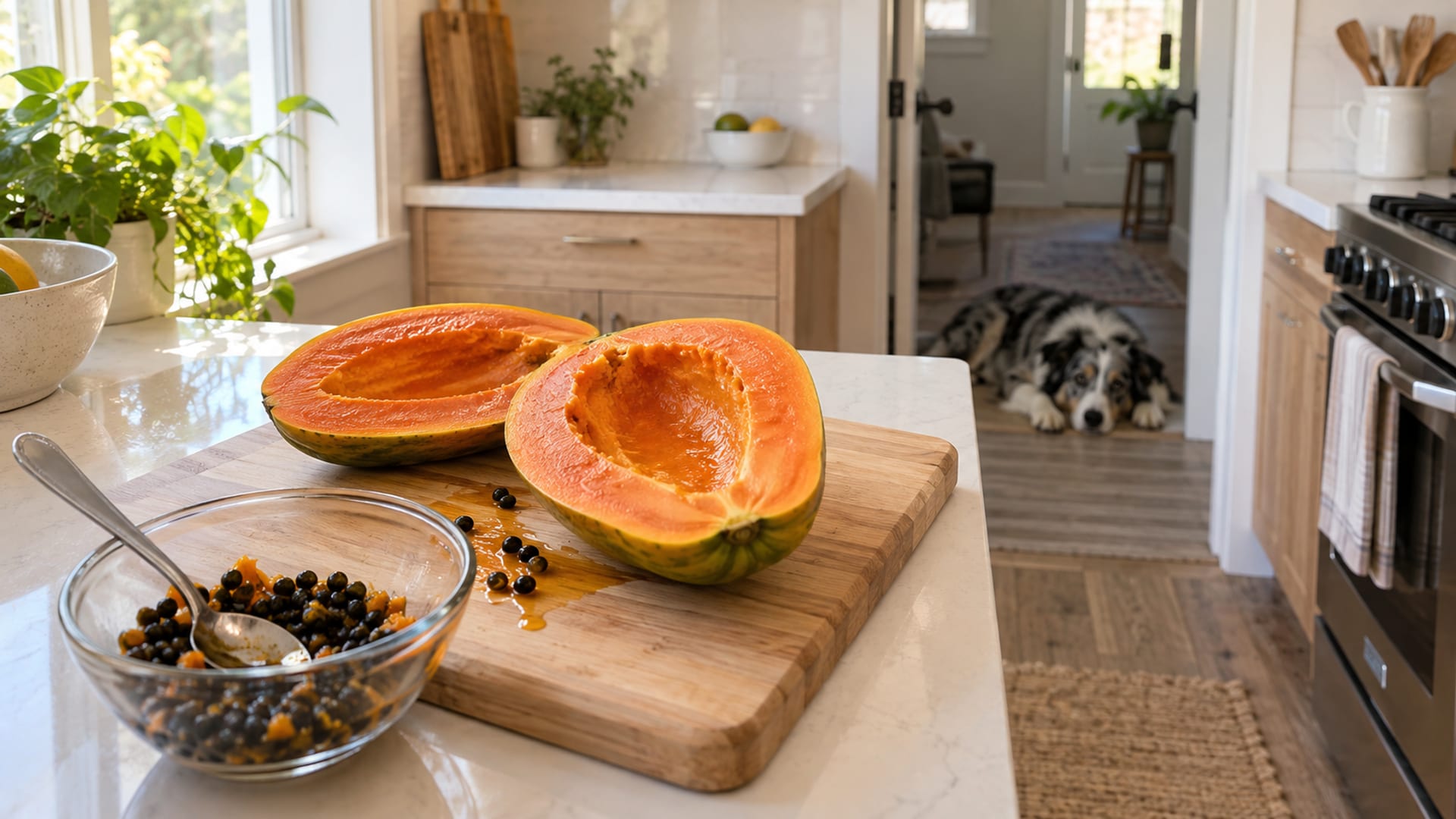
Yes. Most dogs can have a few small pieces of ripe papaya once the skin is cut off and the seeds are scooped out. The ripe flesh has no known toxin for dogs, so the realistic risks are an upset stomach from too much and a blockage from swallowing tough skin or a clump of seeds.
If your dog ate a bite or two of the orange flesh, there is nothing to do but watch for a loose stool. If they got into a pile of seeds, a big strip of peel, papaya leaves or a papaya supplement, read the next section.
Key takeaways
Tap a card to bring it forward.
- Ripe, peeled, seedless papaya is a reasonable treat in small pieces.
- Scoop out every seed and cut off the skin before sharing.
- A large strip of peel or a mass of seeds can block a small dog's gut.
- Papaya enzyme tablets, powders and extracts are a different thing from the fruit.
- Vomiting that keeps coming, belly pain or no stool after eating papaya is a reason to call your vet.
If your dog already ate papaya
Tap or hover a row to highlight it.
| What they ate | What to do |
|---|---|
| What they ateA piece or two of peeled flesh | What to doNothing. Watch for a soft stool. |
| What they ateA large amount of flesh | What to doWatch for vomiting or diarrhea over the day, and call your vet if it keeps up |
| What they ateA pile of seeds or a big piece of skin | What to doCall your vet, especially for a puppy or small dog |
| What they ateLeaves, stems or green unripe fruit | What to doCall your vet and say what part and roughly how much |
| What they ateEnzyme tablets, powder, extract or a supplement | What to doCall your vet or a poison line with the label in hand |
| What they ateDried or candied papaya | What to doCheck for xylitol. If it is listed, call right away. |
The ASPCA says eating plant material of any kind can cause vomiting and an upset stomach, and its advice when you think your dog is ill is to contact your vet or its 24-hour poison line. When you call, say which part your dog ate, about how much, whether the product had other ingredients, and your dog's weight.
Call right away if your dog vomits again and again, cannot keep water down, has a swollen or painful belly, blood in the vomit or stool, trouble breathing, or collapses.
Which parts of a papaya are safe
Tap or hover a row to highlight it.
| Part | Okay for dogs? | Why |
|---|---|---|
| PartRipe flesh, peeled and seedless | Okay for dogs?Yes, a little | WhyNo named toxin in the ripe fruit |
| PartPlain cooked flesh | Okay for dogs?Yes, a little | WhyCooking does not add a risk; skip recipes with sugar substitutes, onion or garlic |
| PartSeeds | Okay for dogs?No | WhyConcentrated seed extracts affected male dogs' fertility in studies; a clump can also cause a blockage |
| PartSkin | Okay for dogs?No | WhyTough to digest, and a big piece can get stuck |
| PartGreen, unripe fruit | Okay for dogs?No | WhyTreat it separately from ripe flesh and leave it out |
| PartLeaves, stems, roots and the milky sap | Okay for dogs?No | WhyNot food for dogs |
The dog research on papaya seeds is about fertility. In a 2011 study in *Animal Reproduction Science*, Ortega-Pacheco and colleagues gave male dogs a concentrated papaya seed extract at 50, 100 and 150 mg per kilogram. Sperm counts and movement dropped, the cells that support sperm were damaged, and one dog on the highest dose had mild diarrhea. The sperm changes showed up around day 60 to 75. An earlier study by the same group also found lower sperm counts with washed and unwashed seed extracts.
Those were concentrated extracts given over weeks, which is a long way from a dog licking a few seeds off the floor. They are still a good reason to scoop the seeds out every time, and to keep seed powders away from a breeding male.
How much papaya to give, and how to prepare it
Give a few small cubes now and then, and less for a small dog or a dog watching its weight. Papaya is a sweet fruit, so a dog with diabetes should get a smaller amount, or none until you have asked your vet.
- Pick a ripe papaya, soft and orange inside.
- Cut it in half and scoop out every seed.
- Slice the skin away.
- Cut the flesh into cubes your dog can chew easily.
- Try one or two pieces the first time, and stop if your dog's stomach objects.
Skip sweetened, spiced, dried, canned-in-syrup or mixed papaya products for this.
Signs to watch for, and when
After a big serving, the usual trouble is vomiting, diarrhea, gas, a sore belly or a dog that goes off its food for a while.
A blockage looks different. The American College of Veterinary Surgeons lists repeated vomiting, loss of appetite, belly pain, tiredness, dehydration and not passing stool as signs that something is stuck in the gut. How soon they show depends on what was swallowed and where it lodged, so a dog who seems normal for the first few hours can still develop a problem later that day or the next.
"My dog has eaten papaya seeds and was fine"
I have no reason to doubt it. Many dogs eat a few seeds or a scrap of skin and never show a thing. That dog's good outcome is real. It just does not carry over to every dog. A few seeds are a different exposure from a whole cavity full, a scrap of skin is different from a large strip, and a small dog has less room for anything to pass. Dogs also differ in how they handle new foods. The fertility effects in the seed-extract studies took about two months to appear, so a dog looking fine the next morning tells you nothing about those.
Papaya enzymes, dried papaya and look-alikes
- Papaya enzyme tablets and papain: these are supplements made from the plant, with strengths that vary by brand. Ask your vet before giving one.
- Papaya powder, capsules and extracts: concentrated, and the label decides what is in them. Keep them out of reach.
- Dried or candied papaya: drying concentrates the sugar, and some brands add more sugar or xylitol. Plain, unsweetened and seedless is the only kind to consider, and fresh is better.
- Papaya juice: mostly sugar without the fiber. Water is the better drink.
- Pawpaw or papaw: in the United States this usually means *Asimina triloba*, a different native fruit, according to the Smithsonian, so the papaya answer does not apply to it.
- Fruta bomba and lechosa: Caribbean names for the same papaya.
- Mango: another tropical fruit with a hard pit and tough skin. Can dogs eat mango? covers it.
Check what you learned
Quick check
Questions about dogs and papaya
Are papaya seeds toxic to dogs?
A few swallowed seeds are unlikely to poison a dog. Scoop them out anyway: concentrated seed extracts affected male dogs' fertility in studies, and a mass of seeds can cause a blockage.
Do papaya seeds contain cyanide?
The veterinary research on papaya seeds in dogs looked at fertility, and cyanide was not the finding. Cyanide is the concern with stone fruit pits, apple seeds and similar. The seeds still come out, for the reasons above.
Can dogs eat papaya skin?
Cut it off. The skin is tough, can upset the stomach, and a large piece can get stuck, especially in a small dog.
Can puppies eat papaya?
A small cube of ripe, peeled, seedless flesh is fine to try. Puppies are small, so keep seeds and skin well out of reach.
Can dogs eat dried papaya?
Fresh is better. If you do share dried papaya, choose plain, unsweetened and seedless, give less than you would fresh, and never give a product that lists xylitol.
Is papaya good for a dog's digestion?
A sudden or large serving is more likely to cause a loose stool than to help. If your dog has an ongoing stomach problem, ask your vet what to feed.
Sources
Checked September 24, 2026.
- ASPCA Animal Poison Control Center, Toxic and Non-Toxic Plants
- Ortega-Pacheco et al., Animal Reproduction Science, Effects of papaya seeds extract on the sperm characteristics of dogs
- Ortega-Pacheco et al., Reproduction in Domestic Animals, Effects of chloroformic extracts from washed and unwashed papaya seeds on the sperm concentration of dogs
- American College of Veterinary Surgeons, Gastrointestinal Foreign Bodies
- Smithsonian Institution, National Museum of Natural History, Carica papaya