
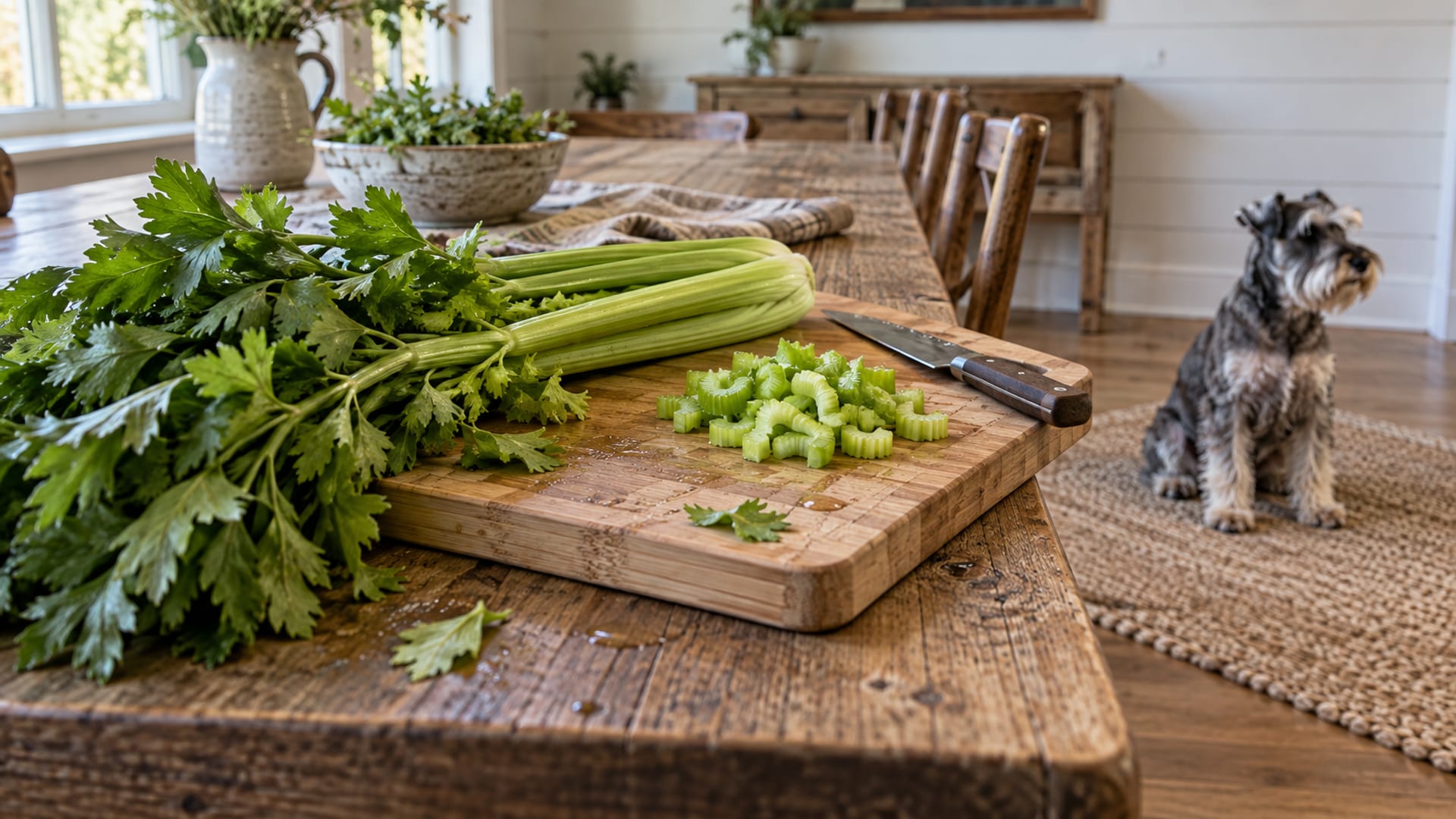
Yes. Plain celery is safe for dogs in moderation. The AKC calls it a low-fat, low-calorie treat, and the ASPCA includes it among vegetables you can share. The catch is the shape: celery is stringy, so cut it into small pieces before it goes in the bowl.
If your dog crunched a few pieces and is acting normally, there is nothing you need to do. If they gulped a long stalk, or the celery came out of soup or a seasoned dish, keep reading.
Key takeaways
Tap a card to bring it forward.
- Plain celery, raw, cooked or frozen, is a safe low-calorie snack for dogs.
- The main risk is choking or a blockage from a long, stringy piece. Cut it small.
- Celery salt, seasoning, soup and juice can carry onion, garlic, salt or xylitol.
- Gagging, drooling or repeated swallowing after celery means call your vet now.
- A little is plenty: treats of every kind should stay a small part of the day's food.
If your dog already ate celery
Start with how your dog is acting right now.
- Breathing normally and acting like themselves after a few small pieces: nothing to do. Too much can bring on gas or a loose stool for a day.
- Gagging, drooling, pawing at the mouth, swallowing over and over, or struggling to breathe: a piece may be stuck. The Merck Veterinary Manual treats these choking signs as a reason for emergency care. Go to a vet now.
- Swallowed a whole or long stalk: watch closely for the next day or two, and call your vet if any of the signs in the section below appear.
- Ate celery in soup, stuffing, dip or a seasoned dish: check the recipe or label for onion, garlic, chives, xylitol or a lot of salt. If any are in it, call your vet or a poison line now. The ASPCA's advice is to get help even when a pet shows mild signs or none after eating something that could be harmful.
When you call, have your dog's weight, what they ate, roughly how much and when. Pet Poison Helpline also asks that you skip home remedies unless a vet tells you otherwise.
Which kinds of celery are okay
Tap or hover a row to highlight it.
| Form | Okay for dogs? | What to know |
|---|---|---|
| FormRaw stalk, washed and cut small | Okay for dogs?Yes | What to knowAKC recommends bite-sized chunks to cut choking risk |
| FormCooked celery, plain | Okay for dogs?Yes | What to knowASPCA says cooked vegetables should have no seasoning |
| FormFrozen plain pieces | Okay for dogs?Yes, in small pieces | What to knowA cold crunchy snack; size them for your dog |
| FormLeaves | Okay for dogs?Trim them off | What to knowLeafy plant material in quantity can block the gut, especially in puppies (AKC) |
| FormCelery root (celeriac) | Okay for dogs?Only plain, cooked or finely chopped | What to knowA different part of the same plant, and denser |
| FormCelery seed, extract or oil | Okay for dogs?No | What to knowMuch more concentrated than a stalk |
| FormCelery salt and seasoning blends | Okay for dogs?No | What to knowHigh in salt, and blends may include onion or garlic |
| FormCelery juice | Okay for dogs?Skip it | What to knowConcentrated, and store brands may add salt or spices |
Celery with peanut butter is a common snack. Use peanut butter with no xylitol and no added salt, and keep the smear thin.
How much celery to give
There is no set number of sticks by dog size. What sets the limit is the treat allowance: the AKC says treats should stay under 10% of a dog's daily diet, and the ASPCA suggests keeping snacks to about 5% of daily calories. Celery is so low in calories that fiber and bulk are the practical limit, well before calories are.
To serve it:
- Wash the stalk and trim the ends.
- Cut it into short pieces, thumbnail size for small dogs and puppies. Slice across the stalk so the strings stay short.
- Serve it plain, raw or cooked, with no butter, salt or sauce.
- Offer a piece or two the first time and see how your dog handles it.
- Stay close while they chew.
The AKC also notes that crunchy celery might freshen a dog's breath. Keep brushing their teeth either way.
Signs to watch for after a big piece
A piece stuck in the throat or food pipe usually shows right away. Merck lists drooling, gagging, trouble swallowing, bringing food back up, and repeated attempts to swallow.
A blockage further down can take longer. Merck lists vomiting, not eating, diarrhea, tiredness and belly pain. Young animals are at greater risk. Any of these after a long stalk is a reason to call your vet the same day.
"My dog has chewed celery sticks for years"
Plenty of dogs do, and that is real for your dog. It still does not make every stick safe for every dog. A big dog who chews each piece to mush is in a different spot from a small dog or a puppy who swallows pieces whole. How much they ate matters, and so does the form: plain stalk is one thing, celery from a pot of onion soup is another. A piece that lodges further down may not cause trouble until later that day or the next. Cutting celery small takes a minute and is the simplest way to avoid a stuck piece.
Soup, stuffing and other celery dishes
When a dog gets celery off a plate, it usually comes mixed with other ingredients, and those are what to check:
- Soup, broth and stews: often cooked with onion and garlic, which damage a dog's red blood cells. Can dogs eat onions? explains what to do.
- Stuffing and holiday dishes: onion, butter and fatty drippings. Too much fat can contribute to pancreatitis, according to the ASPCA.
- Veggie trays with dip: many dips use onion or garlic powder.
- Celery salt, seasoning or bouillon: salt plus flavorings, sometimes onion.
- Juice blends and "green" drinks: may include other fruit, spices or sweeteners such as xylitol.
- Wild plants called "wild celery": the common name covers unrelated plants. If your dog chewed something in the yard or on a hike, take a photo of it when you call.
Check what you learned
Quick check
Questions about dogs and celery
Is celery a laxative for dogs?
Celery is fibrous, and a large helping can loosen the stool or cause gas. The ASPCA notes that a lot of an unfamiliar food can upset a dog's digestion. If your dog is constipated, ask your vet what to give.
What vegetables can't dogs eat?
The onion family is the main group to avoid: onion, garlic, chives, leeks and shallots, in any form. Watch for them in dishes that contain celery.
Can dogs eat celery leaves?
Trim them off and serve the stalk. The AKC notes that eating a lot of leaves and other plant material can cause a blockage, especially in puppies. If your dog ate a big pile of leaves or seems unwell, call your vet.
Can dogs eat cooked celery?
Yes, if it was cooked plain. Celery from soup or stuffing usually shares the pot with onion, garlic, salt or butter, so skip it.
Can puppies eat celery?
Yes, a small piece cut very fine. Puppies are more likely to choke or get a blockage, so stay with them while they eat.
Sources
Checked September 24, 2026.
- American Kennel Club, Can Dogs Eat Celery?
- American Kennel Club, Why Does My Dog Eat Leaves?
- ASPCA, Sharing is Caring: Foods You Can Safely Share with Your Pet
- ASPCA, People Foods to Avoid Feeding Your Pets
- ASPCA, My Pet Ate Something! When Should I Seek Help?
- Pet Poison Helpline, 24/7 Animal Poison Control Center
- Merck Veterinary Manual, What to Do in a Dog or Cat Emergency
- Merck Veterinary Manual, Esophageal Foreign Bodies in Small Animals
- Merck Veterinary Manual, Gastrointestinal Obstruction in Small Animals