
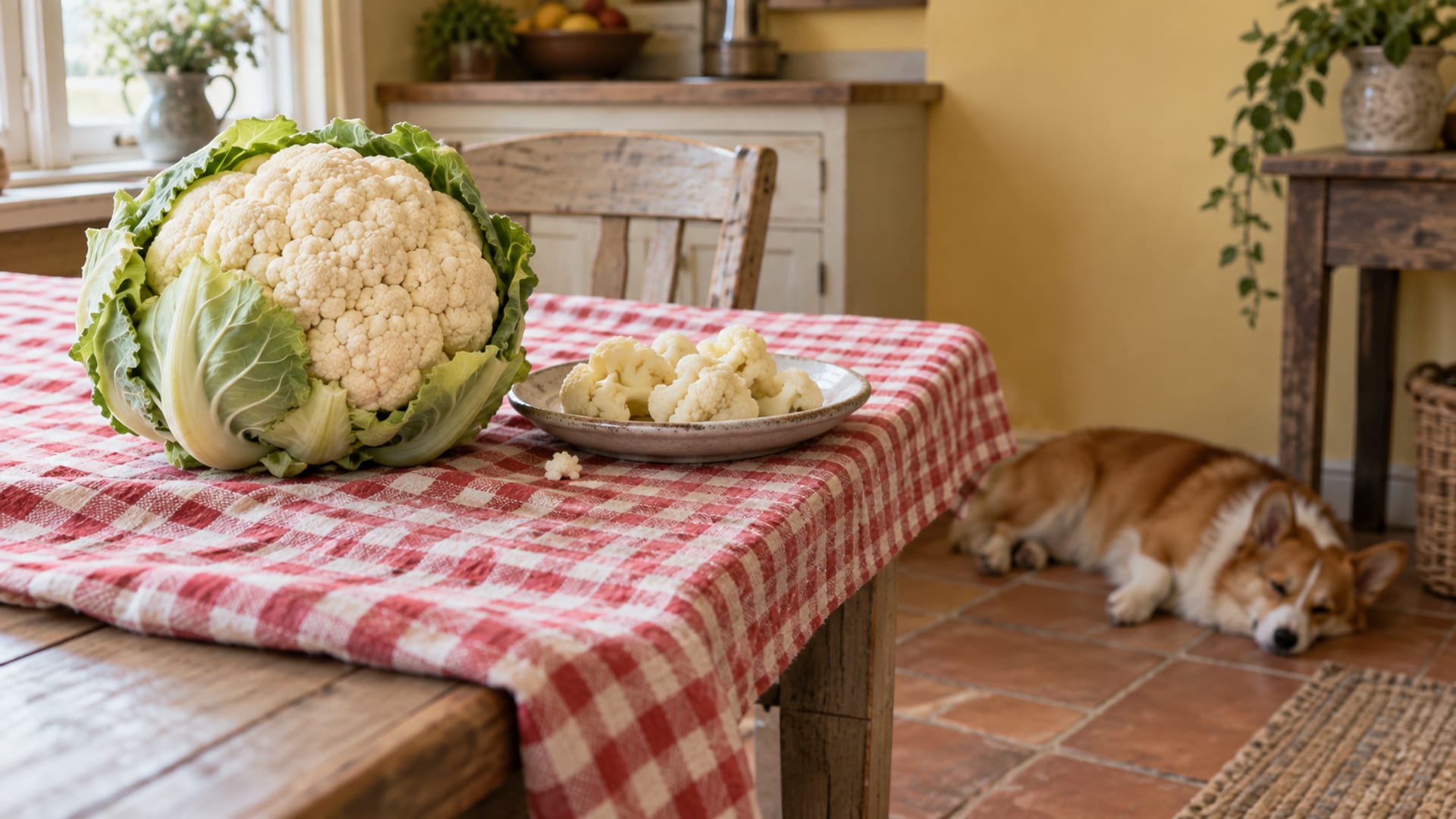
Yes. Dogs can eat plain cauliflower, raw or cooked, as long as it is cut into bite-size pieces and served without seasoning. The ASPCA names cauliflower among the vegetables that make good pet snacks.
If your dog ate a few plain florets, there is nothing to do but watch for some gas. Call your vet if your dog is choking, swallowed a big piece of stem or core whole, or ate cauliflower that was cooked with onion, garlic, cheese or lots of butter.
Key takeaways
Tap a card to bring it forward.
- Plain cauliflower is a safe snack for most dogs, raw or cooked.
- Cut it into bite-size pieces. The stem and core are firm enough to choke on.
- A big or new helping can bring gas, loose stool or an upset stomach.
- Cauliflower rice, crusts, soups and casseroles depend on what else is in them.
- Keep snacks small: the ASPCA suggests no more than 5% of daily calories.
If your dog already ate cauliflower
Tap or hover a row to highlight it.
| What they ate | What to do |
|---|---|
| What they ateA few plain florets, raw or cooked | What to doNothing. Some gas is possible. |
| What they ateA big bowl of plain cauliflower | What to doWatch for gas, a loose stool or vomiting. Call your vet if it does not settle. |
| What they ateA large piece of stem or core, swallowed whole | What to doWatch for gagging, repeated vomiting, belly pain or no stool. Call your vet, sooner for a small dog. |
| What they ateCauliflower cooked with onion, garlic, butter, cheese or salt | What to doFind the recipe or label and call your vet or a pet poison line. |
| What they ateCauliflower bites, tots, crust or a frozen meal | What to doRead the ingredient list for onion, garlic, xylitol or a lot of fat and salt. Call if any are there. |
For anything that might be harmful, the ASPCA says to move your pet away so it cannot eat more and to gather the packaging, which helps show what and how much was eaten. Then call your vet with your dog's weight and roughly when it happened.
Get help immediately for choking, trouble breathing, collapse, repeated vomiting, severe belly pain, seizures, or a dog that does not respond normally.
Florets, stems, leaves and cooked cauliflower
Tap or hover a row to highlight it.
| Part or form | Safe? | Why |
|---|---|---|
| Part or formRaw florets | Safe?Yes, cut small | WhyThe ASPCA allows raw or cooked, in bite-size pieces |
| Part or formPlain cooked florets | Safe?Yes | WhySteamed or boiled with nothing added |
| Part or formStem and core | Safe?Cut small or cook soft | WhyFirm pieces can choke a dog or get stuck |
| Part or formLeaves | Safe?Plain, in small amounts | WhyNot known to be toxic; treat them like any tough plant material |
| Part or formFrozen plain cauliflower | Safe?Yes | WhyThaw or cut it so the pieces are not hard chunks |
| Part or formDried cauliflower | Safe?A little | WhyHarder to chew and more concentrated |
| Part or formButtered, cheesy, fried or seasoned | Safe?No | WhyFat, salt, onion and garlic bring their own risks |
| Part or formCauliflower rice, crusts and snacks | Safe?Check the label | WhyPackaged versions may add salt, oil, onion or garlic |
Cauliflower has no known poison for dogs. The problems come from the size of the pieces, the amount, and what it was cooked with. Fatty dishes can add to the risk of pancreatitis, and onion and garlic are toxic on their own. Can dogs eat onions? and can dogs eat garlic? cover what to do if they were in the dish.
How much cauliflower to give, and how to serve it
Cauliflower works as an occasional treat, and a dog on a complete diet does not need it. The ASPCA suggests keeping snacks to no more than 5% of your dog's daily calories, and the Pet Poison Helpline puts extras at 5% to 10%.
- Wash the head and cut florets into bite-size pieces.
- Serve raw, or steam or boil until soft, with nothing on it.
- Chop the stem and core small, or cook them soft, or leave them out.
- Give one small piece the first time and stop if your dog gets gas or a loose stool.
The AKC mentions fresh vegetables like cauliflower as low-calorie snacks for dogs watching their weight. If your dog is overweight, diabetic, has kidney or stomach problems, or eats a prescription diet, fit any new snack into the plan your vet has set.
Signs to watch for after cauliflower
Too much cauliflower, or a dog that is not used to it, can bring gas, belly discomfort, a loose stool, vomiting or a dip in appetite. These usually settle once the meal is through. Call your vet if they last or your dog seems unwell.
A piece that is too big causes a different problem. Choking shows at once: gagging, coughing, struggling to breathe, pawing at the mouth or collapse. A piece that gets stuck lower down shows later as vomiting that keeps coming back, belly pain, tiredness, not keeping food or water down, or no stool. Either one needs a vet.
"My dog gets the cauliflower stalks every week and has never had trouble"
That can be true, and it is real for that dog. Plain cauliflower is a low-risk food, and plenty of dogs chew stalks without a problem. One dog's track record still is not a rule for the next dog:
- Amount. A few florets are a snack. Half a head can upset a stomach.
- Size. The same stalk is a bigger mouthful for a toy breed than for a Labrador.
- Form. A soft steamed floret and a hard raw core are very different to swallow.
- What it was cooked with. Cheese sauce, butter or garlic change the picture completely.
- The dog. Some dogs handle fiber and new foods better than others.
- Timing. Stomach trouble can wait until the food is being digested, so a dog that seems fine right after a snack may not stay that way.
Cutting the stalk into small pieces keeps it a low-risk treat.
Cauliflower rice, crusts, soups and look-alikes
- Cauliflower rice: plain chopped cauliflower is fine. Packaged or restaurant versions may include salt, oil, onion or garlic.
- Cauliflower pizza crust, bites, tots and chips: made foods with cheese, oil, salt and seasoning. Keep them for people.
- Cauliflower soup, mash and casseroles: often made with butter, cream, cheese, onion and garlic.
- Roasted cauliflower: usually oiled and salted, sometimes with garlic. Set aside a plain piece before seasoning.
- Broccoli, cabbage and Brussels sprouts: close relatives with their own entries, like can dogs eat broccoli? and can dogs eat cabbage?. The AKC's cabbage guide gives the same advice to dice it and keep it moderate.
- Romanesco and broccoflower: cauliflower relatives; plain pieces get the same answer.
- Cauliflower mushroom: a wild mushroom that only shares the name. Can dogs eat mushrooms? covers wild mushrooms and what to do.
- "Cauliflower-like" growths in a dog's mouth: a description of how some warts look, such as oral papillomas, and unrelated to eating cauliflower.
Check what you learned
Quick check
Questions about dogs and cauliflower
Can dogs eat raw cauliflower?
Yes. The ASPCA says vegetables like cauliflower can be offered raw, cut into bite-size pieces so they are not a choking risk.
Can dogs eat cooked cauliflower?
Yes, if it is plain. Steamed or boiled cauliflower with no butter, salt, cheese, onion or garlic is fine.
Will cauliflower give my dog gas?
It can. A large or unfamiliar helping may cause gas or an upset stomach. Start with a small piece and cut back if your dog gets gassy.
How much cauliflower can I give my dog?
Keep it small. Treat it as a snack and keep all snacks within about 5% to 10% of your dog's daily calories, the range the ASPCA and Pet Poison Helpline give.
Can dogs eat cauliflower stems and leaves?
The stem and core are safe once cut small or cooked soft; a big firm chunk can choke a dog. Plain leaves are not known to be toxic, but they are tough, so give only a little.
My dog ate cauliflower with garlic or onion. What should I do?
Find out what else was in the dish and call your vet or a pet poison line. At that point the onion or garlic is what matters most.
Sources
Checked September 24, 2026.
- ASPCA, Sharing is Caring: Foods You Can Safely Share with Your Pet
- ASPCA, What to Do if Your Pet Is Poisoned
- Pet Poison Helpline, Friendly Fall Foods
- American Kennel Club, Obesity in Dogs: A Major Health Threat Hiding in Plain Sight
- American Kennel Club, Can Dogs Eat Cabbage?
- Merck Veterinary Manual, Oral Papillomas in Dogs