

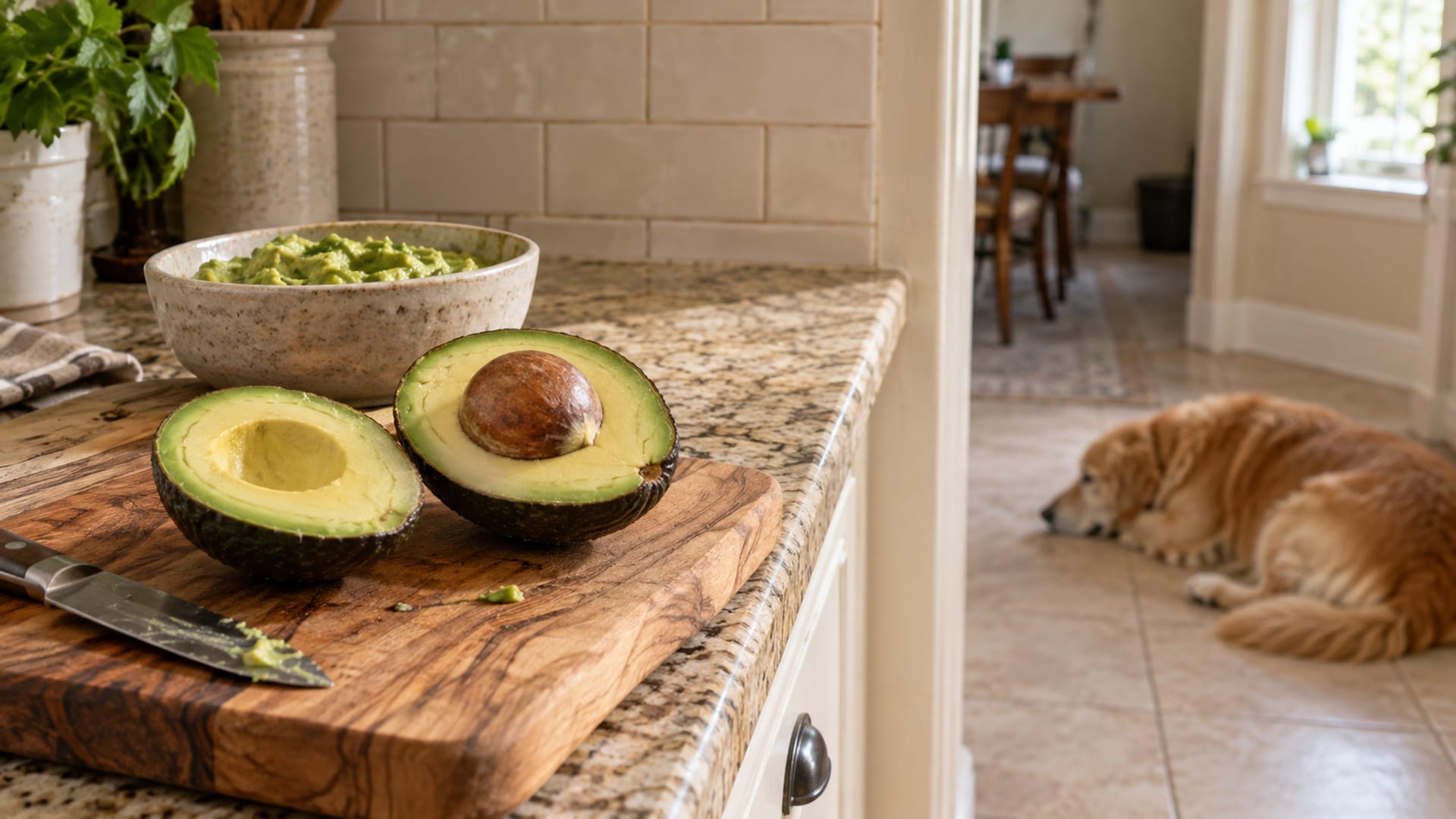
A small amount of plain avocado flesh is not poisonous to dogs, according to Pet Poison Helpline. The trouble sits in the pit, the skin and leaves, and the guacamole bowl, and the flesh is fatty enough that a big helping can upset a stomach or bring on pancreatitis.
If your dog swallowed a pit, call your vet or an emergency hospital now, even if your dog seems fine. If it was guacamole, call as well, because it often has onion and garlic in it. A lick or a bite of plain flesh usually needs nothing more than watching.
Key takeaways
Tap a card to bring it forward.
- Plain avocado flesh is not poisonous to dogs, but it is high in fat.
- A swallowed pit can block the gut and needs a vet right away, even before any signs.
- Guacamole often contains onion and garlic, which are toxic to dogs on their own.
- The skin, leaves, stems and bark carry more persin; keep dogs off the peel and the tree.
- If you share, a small taste of plain mashed flesh is plenty, and none for dogs prone to pancreatitis.
My dog ate avocado: what to do depends on the part
Tap or hover a row to highlight it.
| What they ate | What to do |
|---|---|
| What they ateA bite or two of plain flesh | What to doWatch for vomiting, diarrhea or a poor appetite over the next day, and call your vet if any appear. |
| What they ateThe pit, whole or in pieces | What to doCall your vet or an emergency hospital now. Pet Poison Helpline says to treat it as an emergency. |
| What they ateGuacamole or avocado dip | What to doCall your vet or a poison line. Read the recipe or label for onion, garlic and salt. |
| What they ateSkin, leaves, stems or bark | What to doCall your vet with your dog's weight and a rough idea of how much. |
| What they ateA lot of flesh, or you are not sure how much | What to doCall your vet, especially for a small dog or one that has had pancreatitis. |
The ASPCA's advice is to note how much your dog ate and then contact your vet or its poison control center. Tell them which part it was, how big your dog is, and about when it happened.
Head to an emergency vet if your dog keeps retching with nothing coming up, has a swollen or sore belly, refuses food and water, or strains without passing stool.
Why the pit worries vets most
An avocado pit is big, hard and smooth. It can catch in the throat or lodge in the stomach or intestines, and Pet Poison Helpline describes that blockage as potentially life-threatening. The Merck Veterinary Manual also lists a swallowed whole pit as a cause of obstruction in dogs.
A dog can act completely normal while the pit is still moving and only get sick once it sticks. That delay is why a vet wants to hear about it now. The AKC points out that a blockage is especially serious for smaller dogs, since the pit is large compared with their gut.
Persin, the peel and the avocado tree
Avocado contains persin, a natural compound that is dangerous to birds, rabbits, horses, donkeys, and grazing animals like goats and sheep, according to the ASPCA. Dogs handle it far better. Merck describes dogs as relatively resistant, and names the leaves as the most toxic part of the plant.
Relatively resistant still leaves room for trouble. The ASPCA says the persin in avocado leaves, fruit, seeds and bark can cause vomiting and diarrhea in dogs, and Merck mentions a report of two dogs with heart muscle damage after eating avocado. That is rare, and it is the reason to keep a dog from chewing on the plant.
If you have an avocado tree in the yard, pick up fallen fruit, pits and leaves, and stop your dog from gnawing the bark.
How much avocado can a dog have?
No veterinary group gives a safe amount by body weight. The AKC passes along one dietitian's suggestion of no more than 1 teaspoon of avocado per 10 pounds of body weight. Treat that as an upper limit for an occasional taste, since it is a feeding suggestion and was never set as a safety line.
If you want to share:
- Use the flesh only. Take out the pit and skin, and keep leaves away.
- Mash it or cut it into small pieces.
- Keep it plain: no salt, onion, garlic, lime or seasoning.
- Offer it now and then, as a small extra.
- Skip it for dogs that are overweight or have had pancreatitis. The AKC also suggests puppies go without, since their stomachs can be more sensitive.
Signs to watch for after avocado
After plain flesh, most dogs show nothing. Some get vomiting, diarrhea, gas, a sore belly or a short loss of appetite, usually from the fat.
Call your vet if you see repeated vomiting, belly pain, tiredness and a dog that will not eat. Pet Poison Helpline and the AKC both name pancreatitis as a possible result of fatty food, and those are its common signs.
A stuck pit looks different. Watch for:
- vomiting or retching again and again
- a swollen or tender belly
- no interest in food or water
- straining to pass stool, or no stool at all
- unusual tiredness
Those signs may not appear right away, because a pit can travel for a while before it lodges. Any of them after a swallowed pit means an emergency visit.
"My dog has eaten avocado before and was fine"
That makes sense. Plain avocado flesh is not poisonous to dogs, and many dogs have licked a plate or grabbed a slice with no trouble at all. It still does not make avocado safe every time or for every dog.
What happened depends on how much they ate, and a spoonful is very different from half an avocado. Size matters too: a pit that passes through a big dog can wedge in a small one. The form changes the answer, because guacamole brings onion and garlic and the leaves carry more persin. Some dogs are prone to pancreatitis, where one fatty meal can be enough. And a pit can take time to cause signs, so a dog who looked fine that evening may not have been fine the next day.
Guacamole, avocado oil and other avocado products
- Guacamole: a separate risk from plain avocado. It often contains onion and garlic, which damage a dog's red blood cells, plus salt. The ASPCA names guacamole among party foods to keep away from pets. Can dogs eat onions? explains what onion and garlic do.
- Avocado oil: the AKC says it does not contain persin, but it is very high in fat, so it carries the same pancreatitis concern.
- Dog foods and treats made with avocado: these often use processed avocado ingredients with no pit, peel or leaves. Read the full ingredient list.
- Avocado powder or meal: processed products that can differ from fresh fruit. Check the label.
- Shampoos and lotions labeled avocado: these usually contain oil or extract. The label tells you what is actually in it.
- Alligator pear: another name for the same fruit, with the same answer.
Check what you learned
Quick check
Questions about dogs and avocado
How much avocado can I give my dog?
Only a small taste of plain flesh, now and then. The AKC shares a dietitian's guide of no more than 1 teaspoon per 10 pounds of body weight. Give none to dogs with a history of pancreatitis.
Is avocado toxic to dogs?
The flesh is not considered poisonous to dogs. The pit, the fat, the leaves and skin, and guacamole ingredients are the real risks.
Can dogs eat guacamole?
No. Guacamole usually contains onion and garlic, which are toxic to dogs, and salt. If your dog ate some, call your vet or a poison line.
Is avocado oil safe for dogs?
It does not carry the persin concern, according to the AKC, but it is almost pure fat. Too much can cause stomach upset or pancreatitis.
Can puppies eat avocado?
The AKC suggests puppies avoid it, because their digestive systems may be more sensitive. A swallowed pit is also a bigger danger in a small body.
Is avocado dangerous for cats or pet birds?
Pet Poison Helpline considers the flesh non-toxic for cats, though the pit and the fat carry the same risks. Birds are a different story: the ASPCA lists them among the animals avocado harms most, so keep it well away from a pet bird.
Sources
Checked September 24, 2026.
- Pet Poison Helpline, Can Dogs Eat Avocado? Safety, Risks & What To Do
- Merck Veterinary Manual, Avocado (Persea spp) Toxicosis in Animals
- ASPCA, The Scoop on Avocado and Your Pets
- ASPCA, People Foods to Avoid Feeding Your Pets
- ASPCA, Have a Pet-Safe Super Bowl Sunday With These Tips
- American Kennel Club, Can Dogs Eat Avocados?